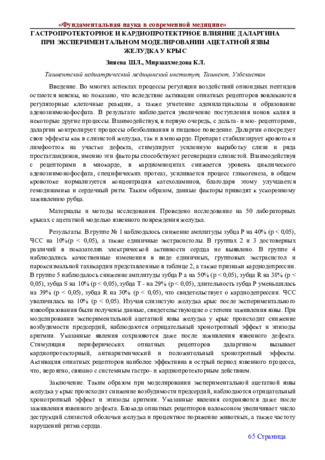
Gastroprotective and cardioprotective effect of dalargin in experimental modeling of acetate ulcer
In many aspects, the processes of regulation of the effects of opioid peptides remain unclear, but it has been shown that, due to the activation of opiate receptors, regulatory cellular reactions are involved, as well as the inhibition of adenylate cyclase and the formation of adenosine monophosphate. As a result, an increase in the supply of potassium ions and some other processes are observed. Interacting primarily with delta and mu receptors, dalargin controls the processes of pain relief and eating behavior. Dalargin mediates its effects both in the gastric mucosa and in the myocardium. The drug stabilizes blood flow and lymph flow in the area of the defect, stimulates increased production of mucus and a number of prostaglandins, these factors contribute to the regeneration of the mucosa. Interacting with receptors in the myocardium, the level of cyclic adenosine monophosphate and specific proteases decreases in cardiomyocytes, the process of glycogenesis increases, the concentration of catecholamines in the general blood flow normalizes, which improves hemodynamics and heart rate. Thus, these factors lead to accelerated scar healing.