JOURNAL OF IQRO – ЖУРНАЛ ИҚРО – IQRO JURNALI – volume 14, issue 02, 2025
ISSN: 2181-4341, IMPACT FACTOR ( RESEARCH BIB ) – 7,245, SJIF – 5,431
ILMIY METODIK JURNAL
Naorem Shreyasi
5th year student
Tashkent Medical Academy, Uzbekistan
Email:
NEONATAL OUTCOMES IN PRETERM BIRTHS DUE TO PREECLAMPSIA VS.
GESTATIONAL HYPERTENSION: A GYNECOLOGIC AND PEDIATRIC
PERSPECTIVE
Abstract:
Preterm birth remains a critical issue in maternal and neonatal health, particularly
when associated with hypertensive disorders like preeclampsia and gestational hypertension.
These conditions significantly contribute to preterm deliveries, leading to adverse neonatal
outcomes such as respiratory distress syndrome, low birth weight, and an increased need for
neonatal intensive care. This study examines the differential impacts of preeclampsia and
gestational hypertension on neonatal outcomes from a gynecologic and pediatric perspective. By
analyzing existing research and clinical data, we highlight the necessity for targeted antenatal
interventions to improve neonatal prognosis and reduce complications. Understanding these
associations can enhance maternal care strategies and ultimately improve perinatal health
outcomes.
Keywords:
Preterm birth, Preeclampsia, Gestational hypertension, Neonatal outcomes,
Hypertensive disorders, Maternal health
Introduction
Preterm birth remains a major concern in maternal and neonatal health, especially in cases
complicated by preeclampsia and gestational hypertension. These hypertensive illnesses not only
increase the chance of preterm birth, but they also have serious consequences for neonatal health,
such as increased rates of respiratory distress syndrome, low birth weight, and developmental
difficulties. Understanding the unique effects of preeclampsia and gestational hypertension on
newborn health enables healthcare practitioners to better customize therapies and assistance to
affected families.
Research underscores the necessity for targeted strategies, as poor maternal health during
pregnancy can substantially alter the trajectory of child development and well-being (Cartwright
et al.). Furthermore, exploring the intricate relationship between maternal physiological status
and neonatal impacts can enhance existing intervention frameworks, ultimately improving
patient care and reducing adverse outcomes (Burns et al.). The interactions between these
conditions necessitate a comprehensive approach to maternal-neonatal care, providing an
opportunity for improved clinical outcomes.
Overview of Preterm Births and Their Significance in Maternal and Neonatal Health
Preterm births, defined as deliveries that occur before 37 weeks of gestation, pose significant
risks to both maternal and neonatal health, accounting for approximately 1 in 10 births in the
United States. These early deliveries are associated with increased rates of infant mortality and
morbidity, particularly among those born extremely preterm, prior to 30 weeks of gestation
(McBride et al.). Maternal conditions such as hypertensive disorders, including preeclampsia and

JOURNAL OF IQRO – ЖУРНАЛ ИҚРО – IQRO JURNALI – volume 14, issue 02, 2025
ISSN: 2181-4341, IMPACT FACTOR ( RESEARCH BIB ) – 7,245, SJIF – 5,431
ILMIY METODIK JURNAL
gestational hypertension, can exacerbate the likelihood of preterm delivery and affect neonatal
outcomes.
Research indicates that while hypertensive disorders can result in complicated pregnancies, their
impact on neonates may differ, often linked to factors like intrauterine growth restriction and
associated complications (Aditya et al.). Understanding the interplay between preterm birth and
maternal conditions is essential for improving perinatal care strategies.
Methods
This article provides a comprehensive assessment of existing information on neonatal outcomes
in preterm births caused by preeclampsia and gestational hypertension. The investigation
includes studies on maternal health records, NICU admissions, infant weights, and respiratory
problems. The methodology uses data synthesis from a variety of clinical and epidemiological
sources to analyze and contrast the impact of these two hypertension diseases.
The study intends to pinpoint particular patterns and trends in newborn health associated with
maternal hypertension disorders by organizing this comparative investigation.
Results
I A
.
Preeclampsia and Its Impact on Neonatal Outcomes
Preeclampsia represents a significant maternal hypertensive disorder that profoundly influences
neonatal outcomes, particularly in preterm births. Studies indicate that infants born to mothers
experiencing preeclampsia often face an elevated risk of various adverse effects, including low
birth weight, preterm delivery, and a heightened incidence of neonatal intensive care unit (NICU)
admissions.
Furthermore, a notable recurrence rate of preeclampsia in subsequent pregnancies suggests a
long-term risk management challenge for affected women and their offspring (Daltveit et al.).
This risk is further complicated by the association of maternal hypertension with fetal growth
restriction and increased mortality rates in preterm infants (McBride et al.). These dynamics
necessitate a thorough understanding of maternal health conditions and their perinatal
implications, highlighting the need for tailored antenatal care.
I B.
Analysis of neonatal complications associated with preterm births due to preeclampsia
The complexity of neonatal complications arising from preterm births due to preeclampsia is
underscored by the significant morbidity associated with these infants. Late preterm infants,
often resulting from conditions like preeclampsia, are particularly vulnerable to respiratory
distress syndrome, jaundice, and feeding difficulties, which can necessitate prolonged
hospitalization and lead to increased rates of readmission compared to their term counterparts
(Engle et al., 2007; Young et al., 2013).
II A.
Gestational Hypertension and Its Impact on Neonatal Outcomes
Significant hazards to neonatal outcomes are associated with gestational hypertension, especially
in preterm births, where the consequences can be severe. Preterm delivery and intrauterine
growth restriction (IUGR) are two problems that can result from hypertension during pregnancy
and impact the neonate's developmental trajectory. Research shows that compared to babies

JOURNAL OF IQRO – ЖУРНАЛ ИҚРО – IQRO JURNALI – volume 14, issue 02, 2025
ISSN: 2181-4341, IMPACT FACTOR ( RESEARCH BIB ) – 7,245, SJIF – 5,431
ILMIY METODIK JURNAL
whose mothers had normotensive pregnancies, babies delivered to moms with gestational
hypertension frequently have lower birth weights and are more likely to suffer from respiratory
distress syndrome.
II B.
Examination of neonatal complications associated with preterm births due to gestational
hypertension
Research indicates that neonates born to mothers with gestational hypertension are at increased
risk for complications such as respiratory distress syndrome and low birth weight, factors that
significantly impact their immediate postnatal health (
土 山 史 佳
). Moreover, the timing of
delivery plays a crucial role, as late preterm births may be associated with varying complications
depending on the underlying maternal health conditions (Aliaga et al.).
Table 1 : Comparison of Neonatal Outcomes in Preterm Births Due to Preeclampsia and
Gestational Hypertension (Summary)
Parameter
Preeclampsia
Gestational Hypertension
Maternal Risk Factors
Obesity,
diabetes,
first
pregnancy, multiple gestation,
chronic hypertension.
Obesity, older maternal age,
previous
gestational
hypertension.
Rate of Preterm Births
High, often requiring early
delivery
to
prevent
complications.
Moderate, but still increases
the likelihood of preterm
birth.
Neonatal Outcomes
Low birth weight, intrauterine
growth
restriction
(IUGR),
respiratory distress syndrome
(RDS), NICU admission.
Low
birth
weight,
respiratory
distress
syndrome, but lower risk
than preeclampsia.
Neonatal Mortality Risk
Higher due to complications such
as fetal hypoxia and prematurity.
Lower than preeclampsia
but still elevated compared
to
normotensive
pregnancies.
Long-Term
Neonatal
Effects
Increased
risk
of
neurodevelopmental
disorders,
cardiovascular issues, metabolic
syndrome.
Risk of metabolic issues, but
neurodevelopmental
risks
are less severe compared to
preeclampsia.
Discussion
The disparities in neonatal outcomes associated with preterm births due to preeclampsia versus
gestational hypertension underscore the urgent need for targeted interventions. The evident
challenges, including increased rates of respiratory distress and poor feeding in late preterm
infants, accentuate the importance of comprehensive care strategies both during and after
pregnancy.
Enhancing maternal support systems may lead to improved long-term health for both mothers
and neonates, particularly in high-risk pregnancies. Implementing structured breastfeeding plans
and educational programs can enhance maternal confidence and support successful feeding
outcomes, as evidenced by effective breastfeeding interventions identified in late preterm
populations.
Conclusion

JOURNAL OF IQRO – ЖУРНАЛ ИҚРО – IQRO JURNALI – volume 14, issue 02, 2025
ISSN: 2181-4341, IMPACT FACTOR ( RESEARCH BIB ) – 7,245, SJIF – 5,431
ILMIY METODIK JURNAL
The management of preterm births, particularly those attributed to preeclampsia and gestational
hypertension, necessitates a multifaceted approach in gynecologic and pediatric care. Research
indicates that late preterm infants encounter unique health challenges, including respiratory
distress and feeding difficulties, which stem from their physical immaturities (Cartwright et al.).
The findings emphasize the critical role that healthcare providers play in addressing the complex
needs of mothers and infants in these high-risk scenarios. Addressing maternal health through
structured antenatal interventions can significantly reduce neonatal morbidity and mortality
associated with preterm births.
M
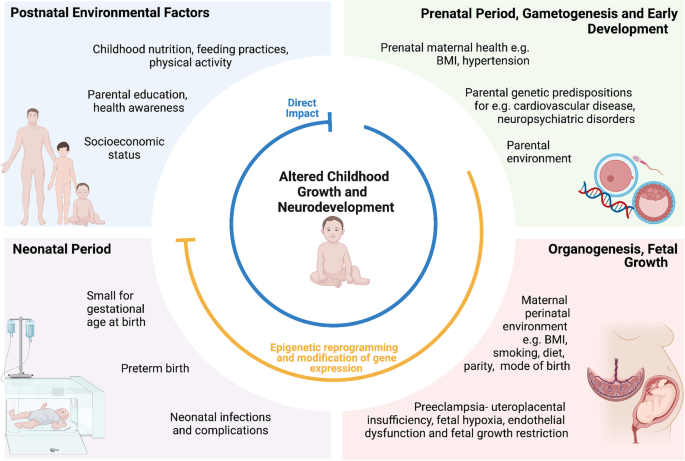
Image 1 : Factors Influencing Childhood Growth and Neurodevelopment
References
1.
土山 史佳
. "
慢性腎臓病合併妊婦における児の長期予後に関する臨床的検討
". 'Elsevier
BV', 2017,https://core.ac.uk/download/188144692.pdf
2. Aliaga, Sofia, Boggess, Kim, Grantz, Katherine Laughon, Herring, et al.. "Center Variation
in
the
Delivery
of
Indicated
Late
Preterm
Births".
2016,https://core.ac.uk/download/304661979.pdf
3. Daltveit, Anne K, Lie, Rolv T, Mahande, Michael J, Manongi, et al.. "Recurrence of
Preeclampsia in Northern Tanzania: A Registry-based Cohort Study.". Public Library of Science,
2013,https://core.ac.uk/download/pdf/19899395.pdf
4. McBride, Carole Anne. "Maternal Hypertension Influences Mortality and Severe Morbidity
in
Infants
Born
Extremely
Preterm".
UVM
ScholarWorks,
2016,https://core.ac.uk/download/51067441.pdf
5. Aditya, Vani, Chauhan, Mudit, Dubey, Smita, Dubey, et al.. "The outcome of preterm births
in pregnant women with hypertensive disorders: an observational study". Medip Academy,

JOURNAL OF IQRO – ЖУРНАЛ ИҚРО – IQRO JURNALI – volume 14, issue 02, 2025
ISSN: 2181-4341, IMPACT FACTOR ( RESEARCH BIB ) – 7,245, SJIF – 5,431
ILMIY METODIK JURNAL
6. Cartwright, JoAnna Kay. "Modification of an Existing Breastfeeding Intervention for the
Late
Preterm
Infant".
'Baishideng
Publishing
Group
Inc.',
2017,https://core.ac.uk/download/480680616.pdf
7. Kayar,
Ilkan.
"Multifetal
Gestations".
'IntechOpen',
2020,https://core.ac.uk/download/322580993.pdf
8. Burns, Meghan. "Community Doula Support for Promoting Healthy Gestational Weight
Gain: A Randomized Controlled Trial". EliScholar – A Digital Platform for Scholarly Publishing
at Yale, 2020,https://core.ac.uk/download/368334889.pdf
9. Aliyah Dosani (Mawji), Ilona S. Yim, Joseph W. Musana, Kiran Shaikh, MiGHT Group,
Nicole Letourneau, Pauline Samia, et al.. "Psychobiobehavioral model for preterm birth in
pregnant
women
in
low-
and
middle-income
countries".
eCommons@AKU,
2015,https://core.ac.uk/download/47263303.pdf
10. Macdonald, Erin M. "Population-Based Placental Weight Ratio Distributions and
Determinants
of
Placental
Weight
Ratios".
Scholarship@Western,
2012, https://core.ac.uk/download/61633337.pdf
11. Image References:
12. "Factors Influencing Childhood Growth and Neurodevelopment." media.springernature.com,
4
March
2025,
https://media.springernature.com/lw685/springer-