
All articles
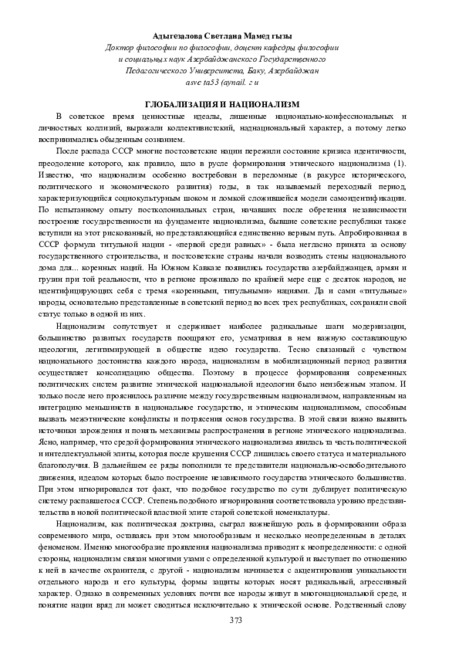
Глобализация и национализм
В советское время ценностные идеалы, лишенные национально-конфессиональных и личностных коллизий, выражали коллективистский, наднациональный характер, а потому легко воспринимались обыденным сознанием.

Гипотеза и прогноз в социальном познании
Актуальность темы исследования определяется, в первую очередь, спецификой переживаемого нашим обществом периода, заключающейся в беспрецедентное и масштабности трансформационных процессов, охвативших все республики бывшего СССР. Эти процессы, начавшись как перестройка командно-административной модели социализма, постепенно приобрели характер продвижения к рыночной экономике, в политическом плане вылились через демократизацию в движение к суверенизации и гражданскому обществу, в сфере идеологий привели к плюрализму, возрождений национального самосознания. Характерной особенностью этих процессов выступает нарастание темпов преобразований, быстрые сдвиги во всех сферах социальной реальности, в сжатые исторические сроки происходящее качественное изменение общества.
Изменения, происходящие в обществе, вызывают потребность выработки «механизма» реагирования, позволяющего учитывать основные этапы, периоды и фазы предстоящих перемен, улавливать ведущие тенденции, ведет перспективы и предугадывать возможные результаты.
Такой «механизм» может быть создан только на прочной методологической базе, позволяющей разрабатывать прогнозы предстоящих изменений основных компонентов и структур обновляющегося общества.
Социальное познание нуждается в преодолении допущенного в силу известных условий отрыва от практики, для чего необходимо усиление его прогностической, ориентирующей функции, что невозможно без развития логики и методологии познания на собственно социальном материале -экономическом, правовом, политической, культурологическом, этнографическом и т.д.
Совершенствование методологии социального познания, которое предполагает развитие гипотетко-дедуктивных и прогностических методик исследования, есть обязательное условие развития всего комплекса гуманитарного знания, их оптимального использования в практике социальных преобразований.
Разработка гипотез и научно обоснованных прогнозов - надежные методологические средства познания как общества в целом, так и его отдельных сфер - экономики, политики, культуры, быта. С другой стороны, обобщение новейших достижений обществоведения является фактором совершенствования методологии социального познания, основывающейся на законах прогностики.
Явно заметен интерес к теоретико-методологическим проблемам прогностических исследований, от решения которых вдут повышения точности, дальности и надежности прогнозов, для обеспечения чего теперь можно обратиться к использования прежде нигилистически отрицавшихся достижений западных специалистов-футурологов.
Стоит самокритично признать, что футурологические западные концепции выполняли не только пропагандистки - апологетическую роль, но и теоретическо-познавательную функцию, обладали эвристическим потенциалом. И этот потенциал может быть использован, если в нем суметь вычленить позитивные элементы, которые способны дать адекватное отражение (а они и создавались для этого) происходящих общественных перемен в их общеметодологической и социально-философской интерпретации.
Сравнение различных методик и моделей прогнозирования помажет выявлению оптимальных методов построения социальных гипотез, опирающихся не на догматизированный марксизм, а на прочный фундамент реальных фактов, на результаты логико-методологического и гносеологического анализа социальных процессов.
Изучение проблемы гипотетико-дедуктивного построения социальной теории и основывающейся на ней прогнозирования актуализируется тем обстоятельством, что суверенитет и независимость Республики Узбекистан требуют обоснования в выборе альтернатив самостоятельного развития, в определении конкретных путей вступления в мировой цивилизационный процесс, что невозможно без использования общих принципов научного предвидения, объективно обоснованных прогнозов.
Между тем, невзирая на увеличение числа работ, посвященных методологическим вопросам социального познания, специальной литературы по особенностям прогнозирования социальных процессов, общепринятой концепции социального прогнозирования пока не создано. Главной причиной этого можно считать догматизацию обществознания; считалось, что принципиальный социальный прогноз будущего выработан классиками марксизма.
Необходимость преодоления догматизма еще более актуализирует проблемы повышения эффективности социального познания, выявления эвристических возможностей прогнозирования, отработки обоснованных принципов социальной прогностики. Они приобретают столь актуальное значение в силу того, что теперь значительно возрастает роль теоретической обоснованности решения практических социальных задач.
Содержательная связь, прослеживаемая между социальным прогнозированием и формулированием гипотез, опирающихся на объективные законы развития социума, имеет актуальное значение для раскрытия внутреннего богатства социальной диалектики, система категорий, принципов и законов которой образует как логическую структуру философского знания, так и методологический инструментарий, позволяющий адекватно отражать не только природу, но и жизнь общества во всей ее динамичности, противоречивости, многообразия.
Цель исследования заключается в выяснении роли гипотезы и прогнозирования в развитии социального знания.
Научная новизна диссертации. Результатами исследования, обладающими элементами новизны, являются:
- раскрыт эвристический потенциал гипотезы в изучении социальной действительности. Делается вывод, что в философско-социальном анализе гипотезы выделяются четыре основных подхода: формально-логический, психологический, методологический и гносеологический. Обосновывается, что гипотеза является не только формой получения нового знания, но и способом построения самой социальной теории;
- выявлена определяющая роль социальных законов, которым дана логическая характеристика, в формулировке альтернативных прогнозов исторических изменений. Выдвигается, и обосновывается утверждение, что прогностическая возможность социального закона тем выше, чем полнее учтены исходные условия его функционирования;
- доказано, что любая теория, в том числе и социальная, стремится не только логически объяснить объект своего исследования, но и предсказать его возможные состояния. Путь к практике через предсказательную функцию у социальной теории существенно отличается от аналогичного в естествознании. Само предсказание в общественной теории приобретает регулятивный или прогностический смысл, чаще всего оформляясь в виде конкретных программ переустройства социальных отношений;
- вскрыты сущность и механизм социального прогноза, под которым понимается рациональное, выполненное в соответствии с определенными нормативами предсказание того, существование чего целиком относится к будущему. Поскольку наступающее будущее корректируется привходящими обстоятельствами, случайными факторами, знание о нем всегда будет гипотетичным, требующим уточнения, конкретизации;
- выявлено и проанализировано различие между социальным прогнозом и утопией. Оно заключается в их целевой ориентации. Прогноз ставит своей непосредственной целью определить круг реальных возможностей развития общества (или какой-то его системы) на той или иной стадии прогресса, и обосновать вероятность каждой из данных возможностей. При этом считается, что прогноз оказывается тем более достоверным и эффективным, чем большей мере он опирается на объективные законы. Утопия, напротив, рисует образ не возможного и вероятного, а желаемого будущего, т.е. реализует не научную, а ценностно-ориентированную форму предвидения;
-обосновано положение о том, что при определении истинности прогностического знания необходим учет двух обстоятельств. Это знание может претендовать на истинное, если оно, во-первых, правильно отражает текущие тенденции, условия их возможного закономерного изменения и сохранения. Но этого соответствия может показаться недостаточно, если не будет произведен учет позиций конкретных социальных сил. Поэтому, во-вторых, истинность прогностического знания определяется и соответствием делаемых на основе него конкретных практических рекомендаций общечеловеческим моральным ценностям;
- доказана необходимость перехода от традиционной прогностики к новой стратегии социального прогнозирования, важными моментами которой являются: а) теоретическая ориентация на назревающие в процессах обновления социальные силы, на групповых и индивидуальных субъектов, формирующихся в кризисных ситуациях и жизненно заинтересованных в цивилизационном изменении общественного бытия; б) выход на уровень глобального прогнозирования - определение мегатенденций и их действия в наших условиях; в) изучение тенденций и построение трендов. При этом местные и региональные тенденции обязательно надо анализировать с учетом глобальных тенденций, оказывающих на них мощное влияние;
- на основе анализа конкретных социальных прогнозов, авторами которых были 36.Бжезинский, А.Зиновьев, А Янов, И.Клямкин и Г.Попов, разработана модель экспертной оценки социальных прогнозов и проектов. Ее существенной особенностью является акцент на способе, методологии построения прогноза, а не сам объект прогнозирования;
- обосновано положение о том, что обретение бывшими республиками СССР независимости и суверенитета резко обостряет интерес к выбору модели перспективного развития, построение которой делает необходимым разработку социальных проектов преобразования различных сфер общества. Конкретика подобных проектов может иметь в качестве методологической основы «технологическое» или долгосрочное прогнозирование, позволяющее активизировать социальное управление, без которого никакие социальные преобразования принципиально недостижимы.
В заключении содержатся теоретические обобщения и выводы, на основе которых сформулированы рекомендации по совершенствованию логикометодологических принципов социального прогнозирования
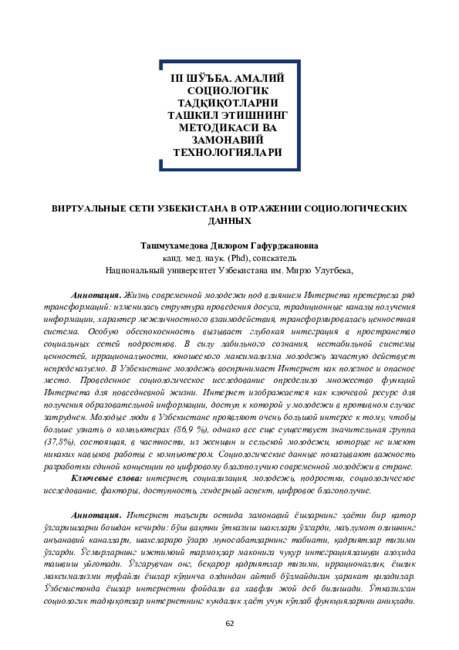
Виртуальные сети Узбекистана в отражении социологических данных
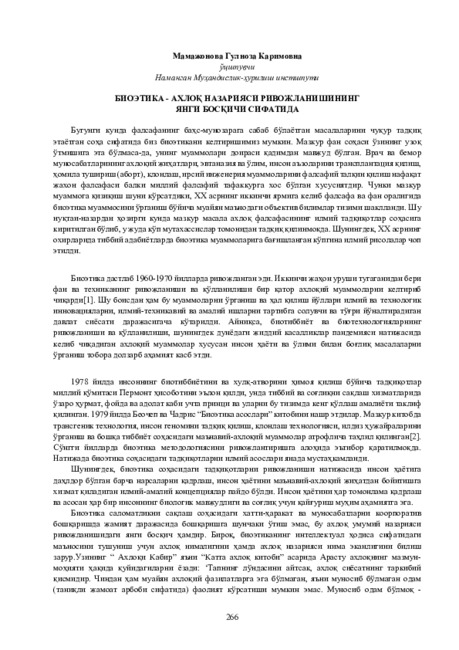
Биоэтика - ахлоқ назарияси ривожланишининг янги босқичи сифатида
Бугунги кунда фалсафанинг баҳс-мунозарага сабаб бўлаётган масалаларини чуқур тадқиқ этаётган соҳа сифатида биз биоэтикани келтиришимиз мумкин. Мазкур фан соҳаси ўзининг узоқ ўтмишига эта бўлмаса да, унинг муаммолари доираси қадимдан мавжуд бўлган. Врач ва бемор муносабатларининг ахлоқий жиҳатлари, эвтаназия ва ўлим, инсон аъзоларини трансплантация қилиш, ҳомила тушириш (аборт), клонлаш, ирсий инженерия муаммоларини фалсафий талқин қилиш нафақат жахон фалсафаси балки миллий фалсафий тафаккурга хос бўлган хусусиятдир. Чунки мазкур муаммога қизиқиш шуни кўрсатдики, XX асрнинг иккинчи ярмига келиб фалсафа ва фан оралигида биоэтика муаммосини ўрганиш бўйича муайян маънодаги объектив билимлар тизими шаклланди. Шу нуқтаи-назардан ҳозирги кунда мазкур масала ахлоқ фалсафасининг илмий тадқиқотлар соҳасига киритилган бўлиб, у жуда кўп мутахассислар томонидан тадқиқ қилинмоқда. Шунингдек, XX асрнинг охирларида тиббий адабиётларда биоэтика муаммоларига бағишланган кўпгина илмий рисолалар чоп этилди.
Z-поколение: через лабиринт соцсетей
Вхождение в эру цифровизации и искусственного интеллекта неукоснительно требует самых высоких компетенций и современных знаний в области ICT-технологий. В Новом Узбекистане своевременному изучению и освоению глобальных цифровых инноваций отводятся особое значение. По инициативе главы государства в республике на уровне национальной стратегии запустили процесс цифровизации экономики и общества1, рассматривая внедрение передовых идей, процессов, продуктов и разработок в качестве движущей силы экономического роста страны. Поставлена задача войти к 2030 году в топ-50 передовых государств мира по рейтингу Глобального инновационного индекса. Окончательный успех революционных начинаний зависит от сегодняшнего подрастающего поколения как будущего авангарда научного и культурного прогресса, преобразований в 1СТ-сфере. Но насколько плодотворным является сегодня взаимодействие с виртуальным пространствохМ у молодых узбекистанцев, нынешних школьников, или, как их называют за ряд особенных характеристик, «цифровых аборигенов»2, а именно: Z-Generation - поколение Z? Насколько подростки в состоянии и приспособлены использовать полезные стороны Интернета и при этом уклоняться от вредоносных влияний и течений? Исследовать во взаимосвязи эти два важнейших аспекта в пользовании сетью Интернет является нашей актуальной задачей на пути к высокой, можно даже сказать - стратегической цели предостеречь и уберечь молодые поколения узбекистапцев от неожиданных последствий и подводных течений информационной глобализации, не дать им потеряться в бесконечных лабиринтах виртуальных сетей. Идею книги мне подсказал Бекмурадов Мансур Бобомурадович, доктор социологических наук, заведующий кафедрой «Социология и психология управления» Академии госуправления при Президенте Республики Узбекистан. Честно говоря, мне было не до книги - недавно сосгоялась защита моей докторской диссертации в АГУ, до этого были две монографии, куча документов до и после защиты. Чувствовала, что вымоталась. Но Мансур Бобомурадович, со свойственной ему прозорливостью, настоял. Пришлось снова собраться, и вот книга в печати. Не могу не выразить слов благодарности Валерию Сергеевичу Хану, большому учёному - философу, историку, социологу, - ответственному редактору книги, моему товарищу и наставнику, помогавшему мне на пути становления академического обществоведа, за прочтение рукописи и ценные рекомендации; а также моей ученице и соратнику Бекназаровой Саиде Сафибуллаевне, профессору, доктору технических наук, обладателю Ньютоновской медали, за положительную рецензию на книгу. Огромная признательность Агентству по делам молодёжи Республики Узбекистан и его руководителю Алишеру Зафаровичу Саъдуллаеву за любезное предложение взять на себя расходы по изданию книги. Отдельное спасибо за техническую и литературную редактуру - Кариму Егеубаеву и Надежде Ли (некоторые заголовки, предложенные Надеждой, - просто супер!), а также - Лайло Аслоновой, взявшую на себя решение оргвопросов по подготовке монографии к печати. 14 конечно же, большая благодарность самим «цифровым аборигенам» - Низомиддиновой Камоле и Му-радбекову Азизбеку, студентам УМЭД, проходившим практику в Сенате, а также моему внуку, студенту университета Вебстера Атаматову Зафару, помогавшим освоить тонкости информационных технологий и открывшим мне цифровую вселенную «изнутри» - со стороны взгляда самих зумеров, недоступную большинству взрослых. Камола и Зафар - настоящие соавторы книги; именно благодаря им составлен словарь сленга зумеров, пугающий своей непонятностью, как слова иностранного языка, но одновременно - и это реальность - являющийся тем языком, на котором разговаривает молодое поколение. И мы, взрослые, должны освоить его, если не хотим безнадёжно отстать и оказаться со своими детьми и внуками в разных вселенных!
Youth are the decisive force of today and tomorrow
examples

Yoshlar ongiga ijtimoiy adolat tamoyillarini singdirishning ma’naviy-huquqiy mezonlari

Yoshlar ijtimoiy manfaatlarini ta’minlash jamiyat taraqqiyoti mezoni

Yoshlar faoliyatida diniy va dunyoviy madaniyat uyg‘unligini ta’minlashning ijtimoiy ahamiyati

Yangi o‘zbekistonda yoshlar ma’naviyati va milliy qadriyatlar uyg‘unligi

YANGI O‘ZBEKISTONDA INSON KAPITALI VA INSON QADRIYATLARI OʻRTASIDAGI MUNOSABATLARI VA ULARDAGI MUAMMOLAR
Yangi o`zbekistonda yoshlarga ajratilayotgan imkoniyatlar
Rivojlanayotgan O`zbekistonda yoshlarni har tamonlama qo`llab-quvvatlab turish. Yoshlarni yetuk kadr qilib tayyorlash maqsadida ko`plab tadbirlar ishlab chiqilmoqda. Bundan tashqari ularning bilimi, salohiyatini oshirish maqsadida Yevropaning rivojlangan mamlakatlari bilan hamkorlikda ishlar olib borilmoqda. Bevosita davlatimiz tomonidan yoshlarning bilimi oshirish maqsadida chet el
davlatlariga o`qishga ketish masalasida imtiyozlar ishlab chiqilgan

XX Asrning 60-80-yillarida O‘zbekistonda amalga oshirilgan ko‘chirish jarayonida yuzaga kelgan muammolarga doir(Nurota vohasi misolida)

Xizmat ko’rsatish sohasi rivojlanishining asosiy yo’nalishlari
What teenagers are interested in online and how much time they spend there: opinions of parents, teachers, and schoolchildren
The youth of Uzbekistan
Today the youth accounts for the most significant part of the Uzbek society. As our President Shavkat Mirziyoyev said in his speech «Today, the pivotal appeal, namely «Our children must be stronger, more knowledgeable, smarter and certainly happier than us!» took a solid place in the minds and hearts of each of us, the parents and broad public. At present, the youth up to 30 years of age make up 32 percent of our country’s population, or 10 million people. The fact that our youth is turning into a decisive force of our today and tomorrow capable of rightfully assuming the responsibility for the future of our Homeland makes all of us proud and pleased»
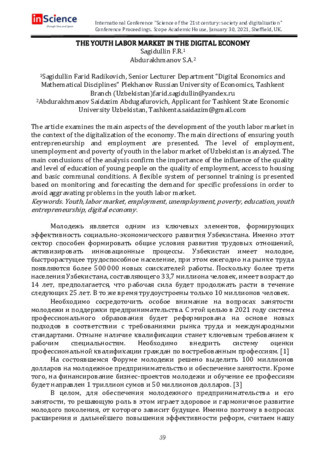
The youth labor market in the digital economy
entrepreneurship and employment are presented. The level of employment, unemployment and poverty of youth in the labor market of Uzbekistan is analyzed. The main conclusions of the analysis confirm the importance of the influence of the quality and level of education of young people on the quality of employment, access to housing
and basic communal conditions. A flexible system of personnel training is presented based on monitoring and forecasting the demand for specific professions in order to
avoid aggravating problems in the youth labor market

THE ROLE OF SOCIAL SCIENCES IN THE TURKISH EDUCATION SYSTEM
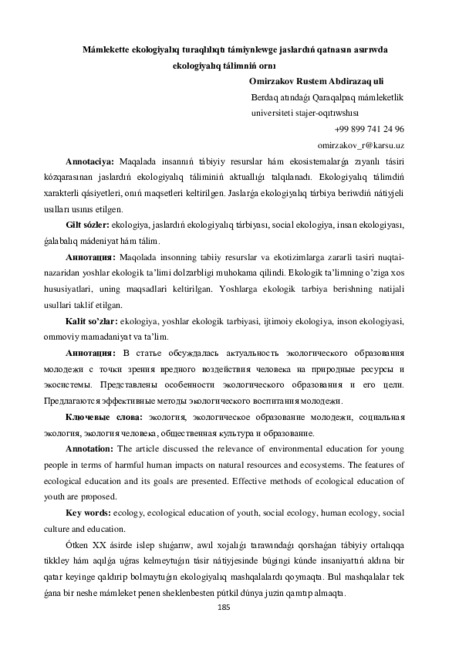
The role of environmental education in increasing the participation of young people in ensuring environmental stability in the country

The purpose of ict use by young people and the issues of raising the information culture

The peculiarities of development of national selfawareness of nations in the conditions of independence (on the example of the Uzbek nation)
The subject of the research: peculiarities, the tendency of the development of national self-awareness of Uzbek nation and the problems existing in this process in the conditions of independence.
The aim of the research analysis of peculiarities, tendencies of development of national self-awareness in the conditions of independence, the defining of the factors influencing on it and working out scientific substantiated conclusions, proposals for the development of the national self-awareness of the youth.
Methods of the research: social-philosophical analysis, historicity, comparative analysis, consistency, analysis and synthesis, conclusion.
The results achieved and their novelty: the term “national self-awareness” developed theoretically with consideration of peculiarities of appearing national development in the period of independence; made up analysis of the meaning “nations” as the real subject in the system of social mutual relations; given the definition of the concept national spiritual legacy; compared position of national self-awareness in the conditions of independence; revealed its place of the national spiritual legacy as one of the important basis of national development; revealed the meanings of historical personalities in the development of national self-awareness, defined factors, influencing of the development of national self-awareness, on decreasing degree of optimism in the development of national self-awareness, arc shown and substantiated factors scientifically, influencing on his overcoming positively.
The practical value: the research worked out conclusions and proposals promote further analysis of the dinamics of the development of the national self-awareness and the creation of the theoretical basis in overcoming problems in this direction.
The degree of embed: materials of the research can be used in teaching social-humanities in the system of education and in upbringing activities competent state and social organizations.
Sphere of usage: the scientific and theoretical conclusions of the research can be used in the system of education, in the activity of state and humanitarian organizations in perfecting educational work and international relations.
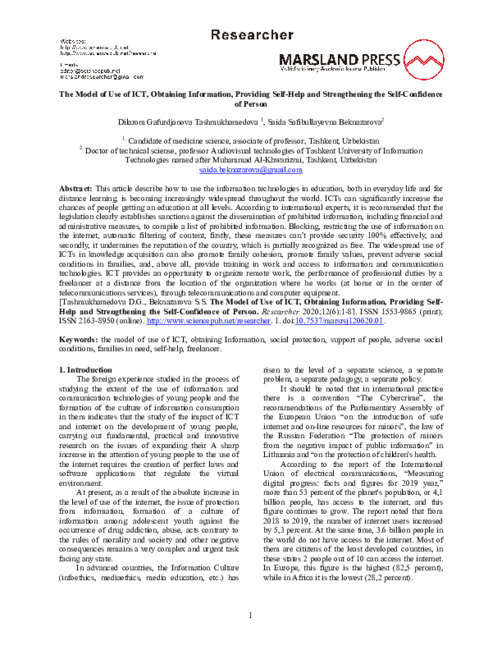
The Model of Use of ICT, Obtaining Information, Providing Self-Help and Strengthening the Self-Confidence of Person

The main directions of the modern conceptaul discourse on civil society (socio - philosophical analysis)
The aim of research work is the social and philosophical generalization of scientific approaches and theories that have emerged in the context of conceptual discourse on civil society, as well as the rationale behind the proposals and recommendations to improve the activities of civil society institutions in Uzbekistan.
Scientific novelty of the research work is as follows:
for the first time the social and philosophical properties of the concepts "civil society conceptual discourse", "civil society information paradigm" were disclosed;
within the framework of modem conceptual discourse on civil society the social and philosophical ideas and views on globalization and information of civil society paradigm have been developed;
proposals to increase the civil society participation in the discussion of legal acts, democratic mindset of the citizens, problems monitoring in the system of social relations have been grounded from the perspective of philosophy;
innovative mechanisms to optimize the activities of institutions of self-government (the use of modem information technologies, preparing memoranda of social partnership, implementation of PR-tcchnologics in community outreach) have been developed.
Implementation of the research results. On the basis of socio-philosophical proposals developed in the framework of modem conceptual discourse of civil society:
University of Glasgow in Scotland has acknowledged an introduction of the terms a "conceptual discourse in civil society", an "information paradigm of civil society" into the scientific activities (certificate from the University of Glasgow. Scotland, as of November 1, 2016). These concepts arc of great scientific value in the study of civil society, as well as in creating conditions for the development of the new paradigmatic research;
socio-philosophical ideas and views within modem conceptual discourse became the basis for the proposals that have been used in the activities of the National Association of NGOs of Uzbekistan; have promoted to further enhancement of efficiency of NGOs in the process of formation and development of civil society, as well as improvement of democratic mindset and monitoring the problems in the system of social relations (certificate of the National Association of non-statc non-profit organizations of Uzbekistan №04-06/24-01 as of February 3, 2017). These proposals served to strengthen the cooperation of Family-Mahalla-Education and have been employed for the organization of regional training workshops, contributing to the qualitative satisfaction of the social and spiritual needs of the people and conducting the problems monitoring in the social relations system, the expansion of NGO experts to participate in the discussion of legal and regulator}' instraments;
a textbook entitled "A Civil Society" (NUUz Press, Tashkent, 2016) and teaching materials "Protection Technologies Against Information and Psychological Attacks" (NUUz Press, Tashkent, 2016) and "A Glossary of terms and Definitions on Civil Society Course" ("Turon Zamin Ziyo" Press, Tashkent. 2017) have been published by the applicant, dedicated to the improvement the mechanisms supporting the civil society institutions, the expansion of social orders system and increasing the role and participation of civil society institutions in the process of adoption and implementation the new regulations, development of non-institutional aspects of civil society. Wide implementation practice of "A Civil Society" course in national universities has contributed students to formulate modem concepts of civil society, obtain the skills of independent thinking, develop ideas of citizenship and establish an independent position on changes taking place in society.

The development of civil society and the changes in social mind during Independence of Uzbekistan
The aim of the research work is to explain the rule of the development of civil society in Uzbekistan and changes in social consciousness.
The scientific novelty of the research is as follows:
based on the dialectical linkages of civil society development and the forms of social consciousness (national and ethnic) in Uzbekistan;
the essence and functional dependence of social and economic consciousness is explained by sociological, regulatory, and apodictive characteristics of subjective and objective factors;
the emergence of a new system of values that reflects the new dimensions of the subjective factor in the development of civil society in Uzbekistan and the emergence of new moral values that reflect universal and democratic values are based on philosophical reasoning that the formation of a new world outlook based on modernization and globalization in social consciousness;
in the context of the development of civil society in Uzbekistan, it has been revealed that the social consciousness has the ability to effectively influence and reflect on the nature of relative independence and social reality;
it is scientifically justified that the process of integration, innovation and its creative features in Uzbekistan as a result of modernization.
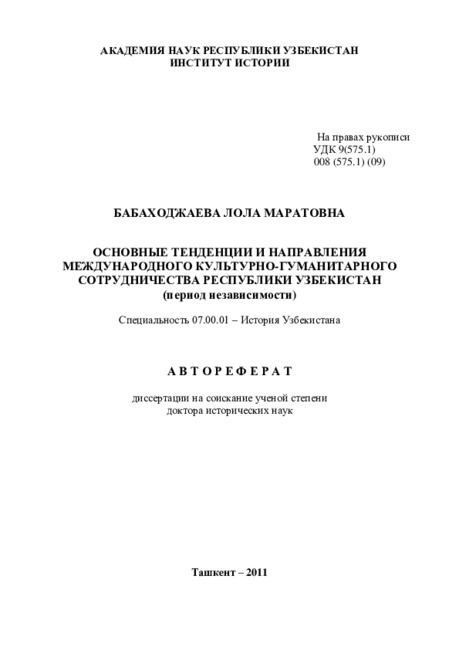
The basic tendency and directions of international culture-humanitarian cooperation of the Republic of Uzbekistan (Independence period)
Subjects of research: integration of the Republic of Uzbekistan into the World Association through various aspects of culture-humanitarian activity.
Purpose of work: to make complex analyses of the key tendencies of development of international culture-humanitarian cooperation, reveal factors exerting influence on dynamical development on the important historical stage of the country.
Methods of research: comparative, historical system analyses and estimation.
The result obtained and their novelty: the present thesis is the first attempt to approach submission for consideration of problems of international culturehumanitarian cooperation incomplex, new sources and archives data have been introduced in scientific terminology.
Practical value: the data systemized in the thesis may be useful for further research of international and cultural relations.
Degree of embed and economic effectivity: the author in frame of research has 33 publications: 2 monographs, 16 articles in the scientific journals (including 3 - in foreign journals), 13 articles in the collections of scientific conferences (including 2 - in foreign collections), 2 articles in internet-portal «ZiyoNET»
Field of application: the files of the thesis may be useful for historians, politicians, culture workers to write scientific works in history of Uzbekistan, international cooperation, at drawing up scientific-methodical works for students of institutions and special educational establishments as well as for institutions carrying out cultural relations with foreign countries.

