
All articles
59-64
66
0
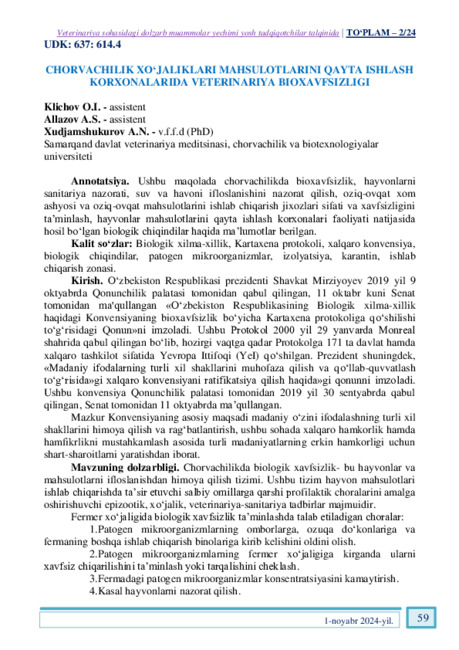
Veterinary biosecurity at livestock processing plants
This article provides information on biosecurity in livestock farming, animal sanitary control, water and air pollution control, ensuring the quality and safety of food raw materials and food production equipment, and biological waste generated as a result of the activities of animal product processing enterprises.
163-169
603
0
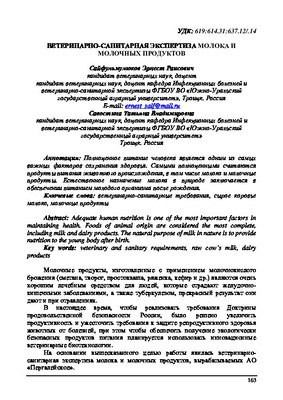
Veterinary and sanitary examination of milk and dairy products
Adequate human nutrition is one of the most important factors in maintaining health. Foods of animal origin are considered the most complete, including milk and dairy products. The natural purpose of milk in nature is to provide nutrition to the young body after birth.
344-345
261
0
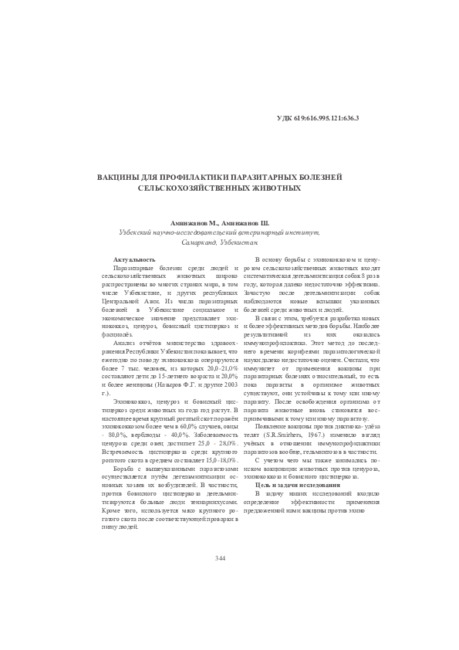
Vaccines for the prevention of parasitic diseases of farm animals
This article provides information on vaccines used to prevent parasitic diseases in farm animals
148-153
239
0
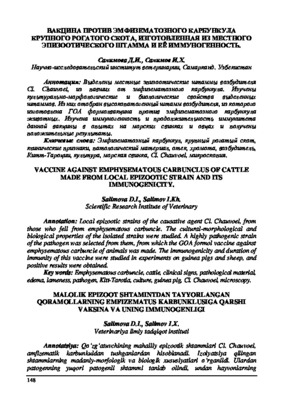
Vaccine against emphysematous carbunclus of cattle made from local epizootic strain and its immunogenicity.
Local epizootic strains of the causative agent Cl. Chauvoei, from those who fell from emphysematous carbuncle. The cultural-morphological and biological properties of the isolated strains were studied. A highly pathogenic strain
of the pathogen was selected from them, from which the GOA formol vaccine against emphysematous carbuncle of animals was made. The immunogenicity and duration of
immunity of this vaccine were studied in experiments on guinea pigs and sheep, and positive results were obtained.
of the pathogen was selected from them, from which the GOA formol vaccine against emphysematous carbuncle of animals was made. The immunogenicity and duration of
immunity of this vaccine were studied in experiments on guinea pigs and sheep, and positive results were obtained.
80-82
143
0
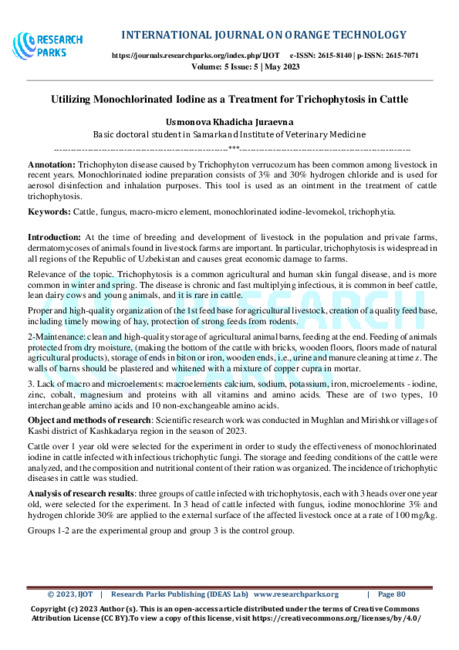
Utilizing Monochlorinated Iodine as a Treatment for Trichophytosis in Cattle
Trichophyton disease caused by Trichophyton verrucozum has been common among livestock in recent years. Monochlorinated iodine preparation consists of 3% and 30% hydrogen chloride and is used for aerosol disinfection and inhalation purposes. This tool is used as an ointment in the treatment of cattle trichophytosis.
152-153
65
0
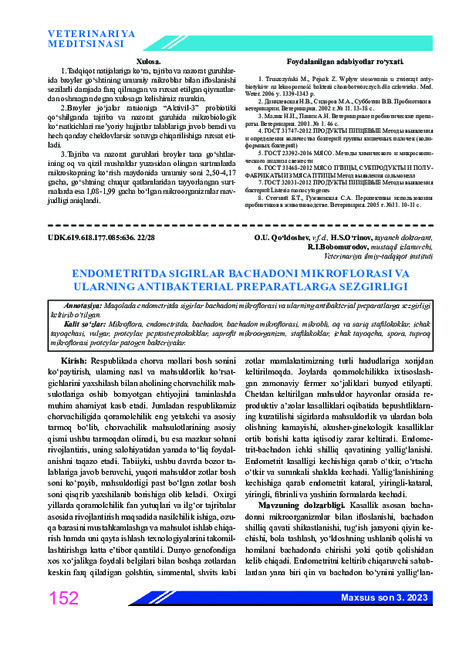
Uterine microflora of cows and their sensitivity to antibacterial drugs in endometritis
The article mentions the microflora of the uterus of cows in endometritis and their sensitivity to antibacterial drugs.
21-22
102
0
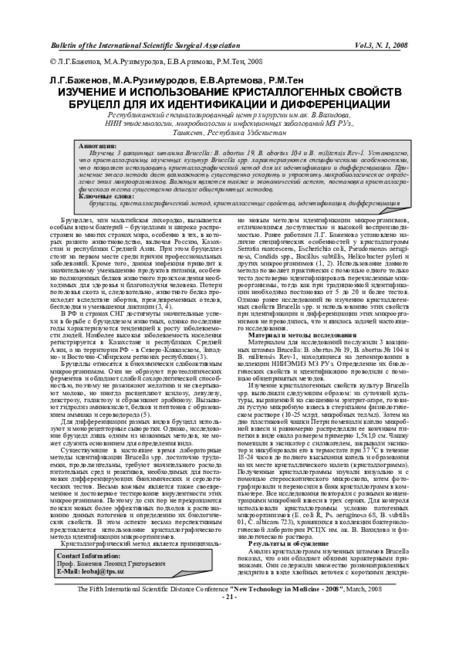
Using the crystallogenic properties of Brucella for their identification and differentiation
Three vaccine strains of Brucella were studied: B. abortus 19, B. abortus 104 and B. militensis Rev-1. Installed
that the crystallograms of the studied cultures of Brucella spp. characterized by specific features,
which makes it possible to use the crystallographic method for their identification and differentiation. At-
changing this method makes it possible to significantly speed up and simplify the microbiological determination
destruction of these microorganisms. The economic aspect is also important, the installation of crystallography
physical test is significantly cheaper than conventional methods.
that the crystallograms of the studied cultures of Brucella spp. characterized by specific features,
which makes it possible to use the crystallographic method for their identification and differentiation. At-
changing this method makes it possible to significantly speed up and simplify the microbiological determination
destruction of these microorganisms. The economic aspect is also important, the installation of crystallography
physical test is significantly cheaper than conventional methods.
30-31
68
0
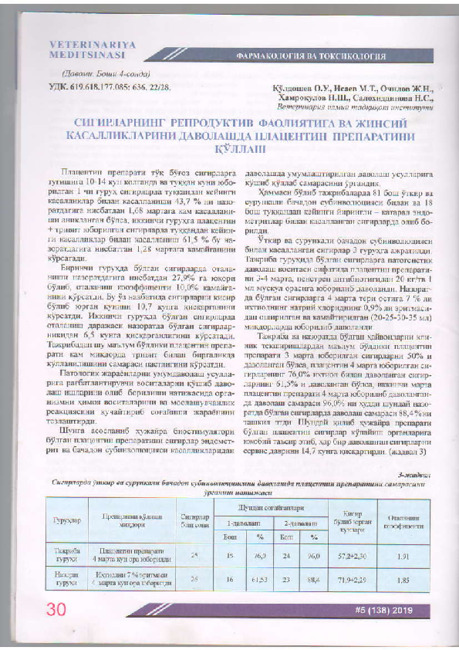
Use of placentin drug in the reproductive activity of cows and in the treatment of sexual diseases
This article describes the conclusion of experiments on the use of the drug placentin in the treatment of reproductive and sexual diseases of cows.
138-143
305
0
Use of eimeriocidal drugs in rabbit eimeriosis
In this article, information is provided about the invasion (protazoic) disease eimeriosis, which causes great economic damage to rabbit farms, the effectiveness of local Toltrox, one of the most effective anti-eimeria drugs, has been tested, and recommendations for use are given.
714-716
67
0
Use of bendase in the treatment of strongylatosis of goats
In this article, the prevalence and prevention of various gastrointestinal strongylatosis among goats in Samarkand region, countermeasures have been studied.

1-6
304
0
Two effective factors in cancer: investigating the effect of ncRNAs in cancer and also the effect of nanotherapy in its treatment
Cancer remains one of the most pressing health challenges globally, necessitating ongoing research into innovative therapeutic approaches. This article explores two critical factors influencing cancer: ncRNAs and nanotherapy. The role of ncRNAs, including microRNAs and long non-coding RNAs, in cancer pathogenesis, progression, and treatment resistance is elucidated. Additionally, the potential of nanotherapy, leveraging nanoscale materials for targeted drug delivery and enhanced therapeutic efficacy, is investigated. By comprehensively analyzing the molecular mechanisms underlying ncRNA dysregulation and the promise of nanotherapy in cancer treatment, this article aims to provide valuable insights into novel therapeutic strategies for combating cancer.
144-148
172
0
Turingiensis UzVITI M No. 1 study of bacteria strain bacillus thuringiensis
In the article, Bacillus thuringiensis var. thuringiensis UzVITI M No. 1 strain of cultural, morphological and biochemical characteristics of scientific research conducted.
184
318
0
Tuglizid is a new domestic anti-tuberculosis drug
This article shows that tuglizid is a new local anti-tuberculosis drug based on research results

11-15
327
0
Tuberculinogenicity of "Viti tuberculin" diagnosticum produced from strain #149
The article presents the results of laboratory tests of the allergic specific activity of the experimental series of PPD tuberculin prepared from the local strain No. 149, produced in collaboration with scientists from the VITI Tuberculosis Research Laboratory and BIOFARMTECH JV, using the simultaneous tuberculinization method. According to the results of the study, it was determined that the produced tuberculin diagnosticum has sufficient allergic specific activity.
41-45
286
0
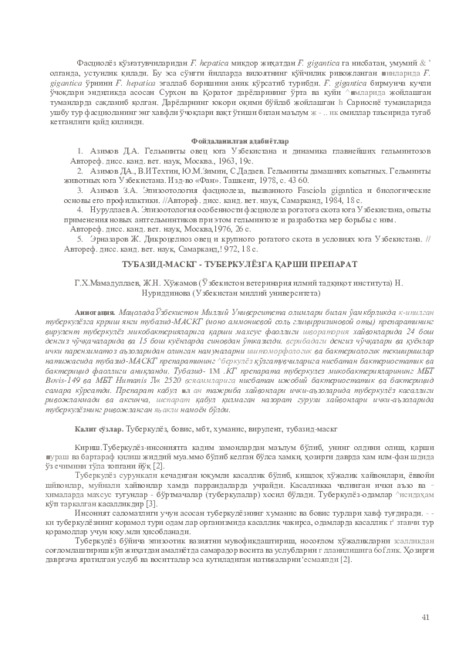
Tubazid-maskg is an anti-tuberculosis drug
In the article, the special activity of the new anti-tuberculosis drug tubazid-MACKG, developed in cooperation with the scientists of the National University of Uzbekistan, against tuberculosis mycobacteria was tested in laboratory animals in 24 guinea pigs and 15 rabbits, and the results were described.
193-195
102
0
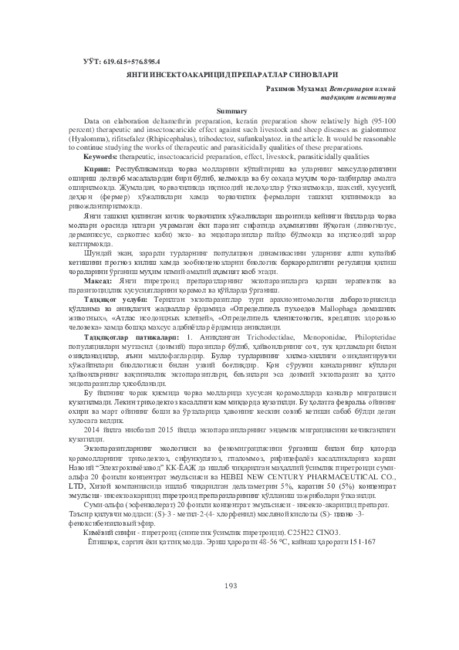
Trials of new insectocaricidal drugs
This article reports on trials of new insectocaricides for ectoparasites that cause significant economic damage to farm animals.
49-51
121
0
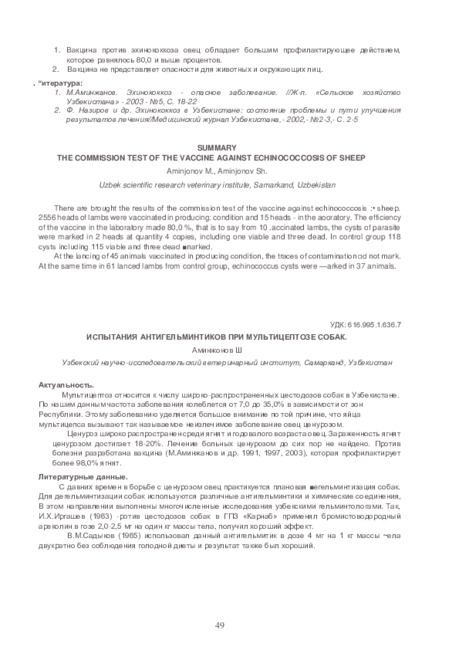
Trials of anthelmintics for canine multiceptosis
This article describes the results of trials of anthelmintic drugs for multiple sepsis in dogs
15-19
170
0
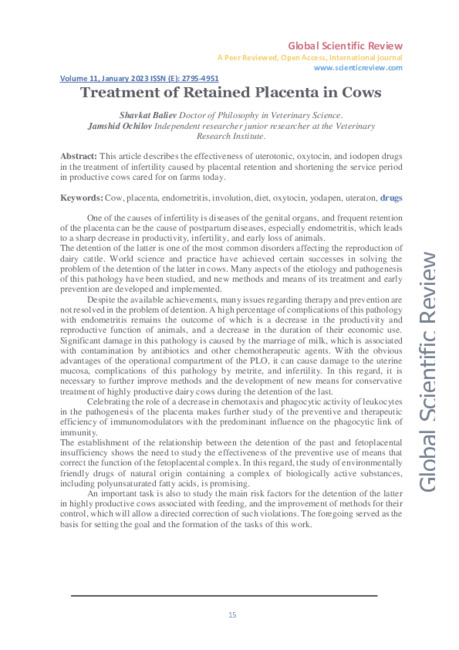
Treatment of Retained Placenta in Cows
This article describes the methods of treatment of placenta from farm animals, specifically in cows
200-202
170
0
Treatment of diseased with lumpy skin disease of cows
The article presents the results of studying the scheme of effective treatment of lumpy skin disease in cattle. A high (83.3%) therapeutic efficacy of a 40%> glucose solution was determined according to the instructions for its use in combination with antibiotics and other therapeutic and supportive drugs.
291-294
248
0
Treatment of burn wounds in dogs
Thermal burns in animals II, III and IV degrees are a serious problem, which occupies a central place in veterinary surgery and combustiology. In farm animals burns often occur in fires in livestock buildings, and domestic animals (dogs, cats) – due to scalding with boiling water or other liquids. In areas where
military operations are conducted, thermal burns are possible when using incendiary shells, incendiary compositions, etc. At the present time, despite the advances made in the treatment of burns, burn disease, mortality among the victims remains high. This is facilitated by the emergence of a painful shock and burn toxemia, as well as the development of pathogenic organisms at the surface of burn wounds as wet coagulated biological tissue at a temperature of the animal’s body, provides optimal conditions for intensive growth of microorganisms.
Just be aware that the wound process in burn injury has three phases (as И.И. Кузин): an inflammation phase (melts necrotic masses and cleansing wounds
from the decay products of damaged tissues and pollution), the regeneration phase (formation and maturation of the granulation tissue) and stage organization and
epithelialization of scar. At various stages of the healing of burn wounds are subject to different treatment principles on which depends the choice of local treatments for
burns. After providing first aid in the first phase of healing burn wounds should prevent the spread of bacterial infection, which is used antibacterials and antiseptics. Further, when the wound is cleansed of necrotic tissue, should pay attention to the impact on the healing process and to use the funds, promotes rapid tissue regeneration. Therefore, treatment should include pain relief and be directed to fighting infection and intoxication of the organism, as well as take into account the peculiarities of healing burn wounds in different phases of wound healing. Therefore, the aim of the study was to find the optimal combination of medicinal substances and drugs that meet these requirements.
military operations are conducted, thermal burns are possible when using incendiary shells, incendiary compositions, etc. At the present time, despite the advances made in the treatment of burns, burn disease, mortality among the victims remains high. This is facilitated by the emergence of a painful shock and burn toxemia, as well as the development of pathogenic organisms at the surface of burn wounds as wet coagulated biological tissue at a temperature of the animal’s body, provides optimal conditions for intensive growth of microorganisms.
Just be aware that the wound process in burn injury has three phases (as И.И. Кузин): an inflammation phase (melts necrotic masses and cleansing wounds
from the decay products of damaged tissues and pollution), the regeneration phase (formation and maturation of the granulation tissue) and stage organization and
epithelialization of scar. At various stages of the healing of burn wounds are subject to different treatment principles on which depends the choice of local treatments for
burns. After providing first aid in the first phase of healing burn wounds should prevent the spread of bacterial infection, which is used antibacterials and antiseptics. Further, when the wound is cleansed of necrotic tissue, should pay attention to the impact on the healing process and to use the funds, promotes rapid tissue regeneration. Therefore, treatment should include pain relief and be directed to fighting infection and intoxication of the organism, as well as take into account the peculiarities of healing burn wounds in different phases of wound healing. Therefore, the aim of the study was to find the optimal combination of medicinal substances and drugs that meet these requirements.
40-44
143
0
Treatment measures for saprolegnioses and trichodinosis
Epizootology, clinical manifestations, pathological changes of saprolegniosis in fish in intensive watermax, and
also treatment of this disease in intensively edged fish.
also treatment of this disease in intensively edged fish.
214
0
Treatment efficacy of BIOMAYRIN drug in experimental tuberculosis of laboratory animals
The article presents the results oflaboratory tests of a new anti-TB drug biomayrin in the organism of experimentally infected guinea pigs and rqbbits. It is obtqined thal the preparation biomayrin, in organism of guinea pigs at 20 mg/kg dose and in organism of rabbits at 4 ml 10 % dose has suficient antimicrobicrl activity against mycobacterium a tuberculosis of tupe M.bovis.

19-23
101
0
Treatment and prevention of fish branchiomycosis in Samarkand region
The article presents the results of the treatment of branchiomycosis in the "Yaloqtepa golden fish" fishery of Payariq district, Samarkand region. As a result of the study, it was shown that the treatment with the probiotic "Innoprovet" combined with traditional treatment and countermeasures was more effective (on hematological indicators and restoring live weight).
16-19
282
0
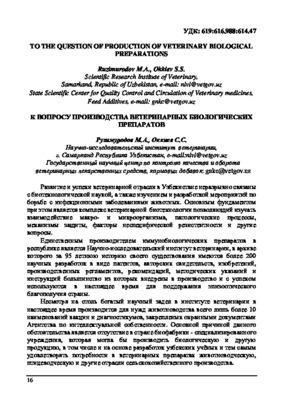
To the question of production of veterinary biological preparations
The development and success of the veterinary industry in Uzbekistan is inextricably linked with biotechnological science, as well as the study and development of measures to combat infectious animal diseases. The main foundation in this case is a complex of veterinary biotechnology that allows studying the interaction of macro- and microorganism, pathological processes, defense mechanisms, non-specific resistance factors and other issues.
74-78
126
0
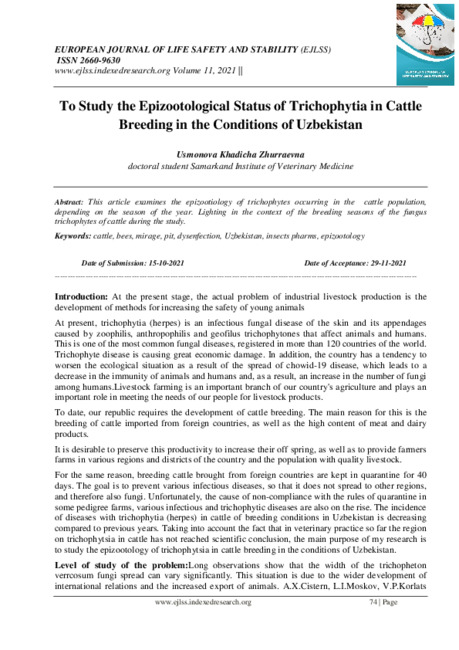
To Study the Epizootological Status of Trichophytia in Cattle Breeding in the Conditions of Uzbekistan
This article examines the epizootiology of trichophytes occurring in the cattle population,
depending on the season of the year. Lighting in the context of the breeding seasons of the fungus
trichophytes of cattle during the study
depending on the season of the year. Lighting in the context of the breeding seasons of the fungus
trichophytes of cattle during the study

