All articles
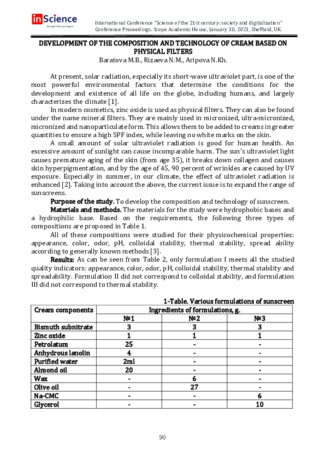
Development of the composition and technology of cream based on physical filters

Development of the biological insecticide based on Bacillus thuringiensis and its introduction into practice
The aim of the research work study of some biological features of indigenous strains of entomopathogenic bacteria Bacillus thuringiensis, development and introduction to practice of the insecticide preparation on its basis.
The object of the research work were collection strains of bacteria Bacillus thuringiensis isolated from soil and pests in conditions of Uzbekistan strains of fungus Fusarium oxysporum, crops’ pests (cutworm, cotton worm, Colorado beetle, cotton aphid, spider mite), crystal-toxins of entomopathogenic bacteria, technological regulations and microbiological typical technology of production.
Scientific novelty' of the research work:
For the first time, index of distribution of the indigenous entomopathogenic bacteria Bacillus thuringiensis was established from the point of view of different regions;
Selected strains of indigenous bacteria Bacillus thuringiensis were classified according to morphological, cultural, physiological and biochemical features;
Antifungal activity towards fungus Fusarium oxysporum and insecticide activity towards main cotton pests (cotton worm - Heliothis armigera Hb., cutworm - Agrotis segetum Den.et Schiff, Colorado beetle - Leptinotarsa decemlineata Say., cotton aphid - Aphis gossypii Glov., spider mite - Tetranychus urticde Koch.) were determined;
Optimal composition of the nutrient medium was established for selected strains and conditions of their growth and development were determined aiming establishment of necessary activity and development;
For the first time, pilot-technological regulation of the production of the new insecticide biopreparation was developed on basis of indigenous entomopathogenic bacteria Bacillus thuringiensis;
Technology for production of the preparation “Antibac-Uz” on basis of indigenous entomopathogenic bacteria Bacillus thuringiensis was developed;
Biological efficacy of pests’ control by the biopreparation “Antibac-Uz” was proved against cotton worm - Heliothis armigera Hb., cutworm - Agrotis segetum Den.et Schiff., Colorado beetle - Leptinotarsa decemlineata Say., cotton aphid -Aphis gossypii Glov., spider mite - Tetranychus urticde Koch.;
It was established that biopreparation “Antibac-Uz” does not exert negative action towards useful insects inhabiting cotton agrobicenosis, e.g. lacewing (Chrysoperla carnea Steph.) and ladybug (Coccinella semperpunctataL.)
Implementation of the research results. Based on production and introduction into practice of the multifunctional biopreparation developed on basis of bacteria Bacillus thuringiensis'.
- A patent for invention was received for the bacterial strain from the Agency for Intellectual Property of the Republic of Uzbekistan (15.05.2006. №IAP 03054). This strain allows to produce biopreparations with insecticide features possessing high biological activity in industrial conditions;
-Biopreparation “Antibac-Uz” was introduced into agricultural practice in 2012-2016 Bukhara, Jizzak, Surkhandarya, Kashkadarya and Tashkent regions fro pest control on cotton (Certificate № 02/23-1267 of the Ministry of agriculture and water resources of the Republic of Uzbekistan dated on December 7, 2016).
Possibility of increased cotton productivity was established as result of application of the domestic biopreparation “Antibac-Uz” to control cotton worm: the fiber yield surplus was 110 kg per hectare and index of production profitability raised by 18%.
The structure and volume of the thesis. Containing 200 pages of text, the dissertation has introduction, six chapters, conclusions and list of references.

Development of technology for processing the raw resources of the likes Karaumbet and Barsakelmes to hydroxide, magnesium oxide and sodium sulfate
The aim of the research work is the development of the technology for the complex processing of the brine of the Karaumbet and Barsakelmes lakes, the dry mixed salts of Karaumbet for hydroxide and magnesium oxide, the Tumryuk deposit for sulphate of the highest grade, the utilization of the distillation liquid -waste from soda production.
The scientific novelty of dissertational research consists in the following:
for the first time, method for complex processing of dry mixed salts of Karaumbet for hydroxide, magnesium oxide and sodium sulfate with simultaneous utilization of the waste of the distillery soda plant was developed;
method has been developed for the complex processing of the brine of Karaumbet and Barsakelmes lakes, dry mixed salts of Karaumbet for hydroxide and magnesium oxide, the Tumryuk deposit for sodium sulphate, the purification of the distillation liquid to produce brine suitable for the production of soda ash;
Sodium sulfate of the highest grade from the Tumryuk deposit is produced with high yield of the finished product;
developed technologies for processing the lag of the lakes Karaumbet and Barsakelmes and dry mixed salts of Karaumbet for hydroxide, magnesium oxide, mirabilyte of the Tumryuk field and mirabilyte, isolated from dry mixed salts, for high purity sodium sulphate, purification of the distillation liquid to obtain sodium chloride brine.

Development of multifunctional drilling fluid solutions on the basis of clay minerals and waste of the soda production of Karakalpakstan
The aim of the research is to develop methods of application of bentonites, dolomites of Karakalpakstan as the basis of drilling fluids and waste soda production as a stabilizing and inhibiting additives.
The scientific novelty of dissertational research consists in the following:
Optimal conditions for obtaining mud powders from Bentonites of Krantau, Bcshtjubcn and Hodzhakul fields arc established, providing economy of raw material consumption and allowing to receive drilling fluids with wider spectrum of controlled rheological characteristics;
the possibility of substitution of commercial lime in the composition of drilling fluids with soda production waste is shown;
the basic possibility of preparation of claylcss drilling solutions is shown, on the basis of a waste of soda production with additives of lignosulphonatc and caustic soda with high inhibitory properties and providing reduction of clampcd-rclatcd drilling tools complications;
the connection of physical and chemical processes occurring at contact of rocks and filtrates of drilling fluids with their technological and rheological parameters is established;
the recipes of fresh, mineralized, calcic, little silicated clay drilling fluids using bentonites of Krantau, Bcshtjubcn and Hodzhakul deposits arc formulated;
New recipes of weighted clay fluid solutions on the basis of calcite and dolomite orc of Karakalpakstan were created.

Developing of new polygenomic hybrids of cotton by composite interspecific hybridization and disclosure of their properties
The aim of the research work is the hybridization of amphidiploids obtained according to the scheme [G. thurberi Tod. x G. raimondii Ulbr.) x G.arboreum L.] x G.hirsutum L. with cultivars G.hirsutum L. and G.barbadense L. And the developing of genetically enriched polygenomic new inter-species composite hybrids of families and lines.
Scientific novelty of the research is as follows:
for the first time, new 4 and 5 species composite interspecific hybrids were developed, based on the hybridization of the amphidiploid with a composite structure {[(G.thurberi Tod. x G.raimondii Ulbr.) x G.arboreum L.] x G.hirsutum L.} with cultivated species G.hirsutum L. and G.barbadense L
the formation and variability of the main agronomically valuable traits in interspecies composite hybrids (up to Fs) developed with the participation as the maternal form of the amphidiploid {[(G.thurberi Tod.x G.raimondii Ulbr.) x G.arboreum L.] x G. hirsutum L.};
correlation relationships of some agronomically valuable traits in newly created interspecies and backcross hybrids have been determined;
the possibility of identifying carly-maturity, productive recombinants and families with high yield and fiber quality, weight 1000 seeds, is grounded. Seeds, i.e., with a set of agronomically valuable traits by overcoming the negative correlation links of the interspecific composite hybrids of cotton that arc manifested in agronomical characters;
the importance of backcrosses in the developing of genetically enriched, with a positive complex of agronomically valuable traits of recombinants in the production of polygenomic interspecies hybrids of cotton with positive transgressive variability of attributes and properties, is proved;
new varieties SP-1303, SP-"Kamolot", S-1306 and S-7277 were developed with a set of economically valuable traits from polygenomic cotton lines.
Determination of twin-species of malaria mosquitoes with the help of molecular-genetic methods of diagnostics
Аn.martinius and Аn.artemievi
Cycloartane glycosides from Astragalus unifoliolatus Bunge
Subjects of the inquiry: Roots and above the ground parts of Astragalus unifoliolatus Bunge.
Aim of the inquiry: Isolation and study of the cycloartanc glycosides from the plant Astragalus unifoliolatus Bunge, screening the biological activity of the isolated substances and extract from plant material.
Method of the inquiry: extraction, chromatography methods, chemical, physical and spectral methods of investigation.
The results achieved and their novelty: Tritcrpcnc compounds of the plant Astragalus unifoliolatus Bunge, growing in the Republic of Karakalpakstan have been studied. 7 triterpenoid compounds have been isolated from the plant, 4 of them are novel. The biological tests have been showed the less toxicity, cholagoguc and hypocholesteremic actions of the ethanol extract from the studied plant. The cytotoxic properties of the components from above the ground parts of Astragalus unifoliolatus Bunge were also determined.
Practical value: The biological investigations showed that the high effective medicines for hepatology practice may be created on basis of the extract from the studied plant.
Degree of embed and economical effectivity: The plant Astragalus unifoliolatus Bunge, growing in the Republic of Karakalpakstan is a rich source of cycloartanc glycosides.
Sphere of usage: The extract from above the ground parts of Astragalus unifoliolatus Bunge containing the sum of cycloartanc glycosides may have interest in perspective as medicinal preparation for treatment hcpatologic diseases and for creation of the high specific antitumor drugs. Chemical structures of the novel glycosides, cyclounifoliosides А, В, C and D, their physical constants and spectral parameters arc included in M. I. Isaev’s hand-book «Cycloartane triterpenoids and glycosides» published in Springer.
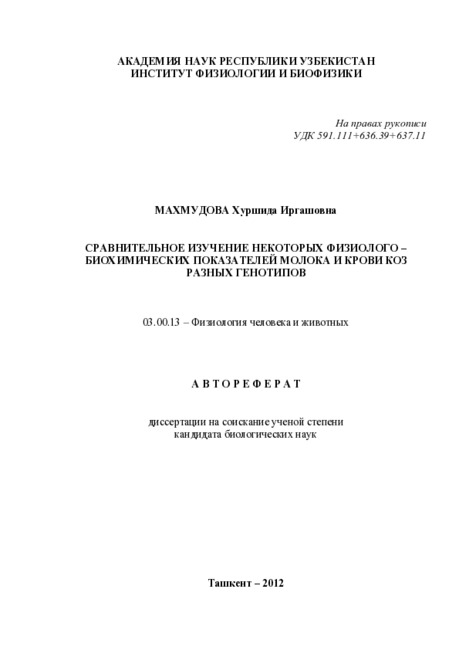
Comparative Study of Dairy Productivity and some Physical and Chemical Parameters of Milk and Blood of Goats of Different Genotypes
Subjects of research: goats djadari, wool, crossbreed, milk, serum and uniform elements of blood, celle immune system.
Purpose of work: comparative study of dairy productivity and some physical and chemical properties of milk and blood of goats of different genotypes and grown up at through-year pasturing condition at piedmont zones of Uzbekistan.
Methods of research: laboratory and research-and-production experiments, physiological and biochemical analyses, statistical processing.
The results obtained and their novelty: It is established, that dairy productivity, chemical composition of fodder and some physical and chemical properties in goats of different genotypes and breed in the southern regions of Uzbekistan do not differ; the milk of djadari goats contained higher content of fat, casein and other substances in comparison with other genotypes groups. For the first time, the effect of genotypes and ecological factors on some physiological and biochemical parameters of blood and resistance of goats was studied. It is shown for the first time that the nutrients' requirements for goats are satisfied in a certain degree by the increase of pastures’ productivity. As a result, an increase in blood proteins, uniform elements and the resistance of the organism are observed. It is revealed for the first time, that goat milk is more thermostable and can be kept for a longer time in comparison with milk of other animals. Data on chemical composition and some physical and chemical properties of milk obtained from goats of different genotypes are new.
Practical value: The presented results can be used in animal breeding, and in scientific and research projects on the study of the natural resistance of goats of different kinds of productivity.
Degree of embed and economic effictivity: Results of work are applied in goat breeding plants; they are used in education and research.
Field of application: physiology, biochemistry, agricultural and veterinary sciences.

Colloid-chemical regularities of fixing of mobile sands by multifunctional structurants …
The aim of research work is determination of chemical and chemical properties of saline soils and mobile sludge with the help of multifunctional structures on bases of water-soluble SAS (surface-active substance) and industrial waste
The scientific novelty of the research work is the following:
the colloid-chemical principles of the selection of reagent compositions for the chemical fixation of mobile saline soils and sands arc determined;
the mechanisms of the fixing effect of the developed multicomponent mcliorants from chemical reagents and industrial wastes arc grounded;
optimal conditions for fixing saline sands of water-soluble polymers have been established, which is connected with the transition of the polymer from the soluble form to the insoluble form due to its transformation from two-dimensional structure to three;
optimum conditions for phytomclioration arc revealed: the mechanical strength of the crust is 2.6-3.0 MPa and the number of waterproof aggregates is 70-80% on the basis of the proposed methods for fixing mobile saline sands;
the mechanism of structure formation under the action of complex additions of Са(ОН)г + SDB and Са(ОН)г + EG in systems “soil-salt-structurant” is defined, which reduces to the interaction of the additive with water-soluble layers with the formation of gel-like products adhesively fixed on clay particles, and the adsorption and adhesion of tumors is provided by the surface active component;
the optimal conditions for the “soft” fixation of mobile saline soils and sands with additives of sawdust and leaf fall, which increase the porosity and moisture capacity of the surface crust ensuring the development of plants.

Cloning, characterization and investigation of molecular evolution of pathogen- resistance cluster MIC-3 gene family in cotton (Gossypium spp.) and its significance for cotton biotechnology
Topicality and relevance of the theme of the dissertation. Due to the globalization, there arc urgently pressing concerns for world agricultural production to provide bio-safcty/bio-security of the world’s leading crop species and safeguarding them from biotic (phytopathogens, pests) threats. “Biological threats from harmful organisms in agricultural practice cost over $1.4 trillion in crop damage, equaling 5% of global domestic product (GDP)”1.
During the years of independence, in our country extensive work has been done to improve crop yields, and today agricultural production is part of the country’s annual economic income. At the same time reforms in the cotton sector arc being carried out and certain results obtained on the basis of held program measures, i.e. areas of cotton crops were reduced, and yields have been increased by an average of 3-4 quintals.
World cotton production suffers from wilt diseases (Fusarium and Verticillium) and root-knot (Meloidogyne incognita; RKN) nematodes. RKN accounts for an estimated 14% of all worldwide plant losses, which is reflected in the amount of about $100 billion dollars annually. “The significant cotton yield lost in the USA during the last 10 years of period because of RKN estimated to be about $205 million annually”2. The actuality of the problem in this context, together with fighting wilt pathogens, is to study and develop modem biotechnology tools against biological vectors conditioning to spread wilt diseases in cotton. Conducting research on the genetic basis of nematode managment is justified as follows: need to identify genes conferring resistance to pathogens in cotton; study their structure and composition in the cotton genome; determining the location on the chromosomes; study of modem biotechnology and genomics approaches for creation of lines resistant to pathogens.
This dissertation investigation serves to some extent to address the tasks defined by the Law of the Republic of Uzbekistan No 116-11 “On protection of agricultural plants against pests, diseases and weeds” of 31 August, 2000, the Resolution No. 148 of the Cabinet of Ministers of the Republic of Uzbekistan “On measures of improving the structure and increasing the efficiency of plant protection service” issued on March 29, 2004 as well as other legal documents approved in this direction.
The aim of the research is to determine MIC-3 gene position, structure, content, and complexities as well as molecular evolution and gene duplication mechanisms in allotctraploid and putative ancestor-like diploid cotton genomes.
Scientific novelty of the research includes the following:
for the first time, a total of 169 individual members belonging to MIC-3 supergene family from 15 allotctraploid and diploid genomes were cloned, sequenced and characterized;
a detailed sequence analysis of 169 MIC-3 gene found out that in 15 cotton genotypes were detected 4 to 16 gene members with 2 to 10 subfamilies per gcnotype/spccies. These 169 MIC-3 gene sequences from Gossypium species were phylogcnctically grouped into a total of 17 genome-specific subfamilies;
analysis of allotctraploid genome-derived MIC-3 gene members further identified 42 haplotype sequences, specific to At- or Dt-gcnomcs, that helped to identify MIC-3 gene specific SNPs. Based on haplotype and subfamily groups, 9 putative MIC-3 loci in At-gcnomc and 3 putative loci in Dt-genomc of allotctraploid cottons were identified;
for the first time, MIC-3 derived genome specific SNP markers were developed, and clustered localizations of MIC-3 gene members in homcologous segments of chromosomes 4 and 19 of G. hirsutum were identified;
for the first time, nucleotide substitution rates and patterns of molecular evolution of MIC-3 multi-gene family in 15 tctraploid and diploid cotton genotypes were reported.
estimation of an average number of synonymous (ds) and nonsynonymous (dN) nucleotide substitutions for coding DNA sequences of MIC-3 gene family detected that despite an carly-coursc concerted evolution may be evident, MIC-3 gene family of cotton species are evolving under a “birth-and-death” evolution with purifying selection in exon-1 and diversifying selection in exon-2.
for the first time “gene amplification” was suggested as a possible mechanism to preserve all duplicated copies of MIC-3 genes and to develop new gene functions during cotton plant defenses under “bait and switch” model.
the results indicated that MIC-3 gene duplication events occurred at various rates, once per 1 million years (MY) in the allotctraploids, once per ~2 MY in the A/F genome clade, and once per ~8 MY in the D-gcnomc clade;
expression analysis detected that MIC-3 genes arc highly expressed in Fusiarium and Verticillium wilt resistant cotton genotypes;
for the first time, 2.5 kb intergenic spacer region, containing a MIC-3 promoter with root-specific signal sequence were cloned, sequenced and characterized.
CONCLUSION
On the basis of the performed investigation on the theme of this doctoral dissertation “Cloning, characterization and investigation of molecular evolution of pathogen-resistance cluster MIC-3 gene family in cotton (Gossypium ssp.) and its significance for cotton biotechnology” the following conclusions were presented:
1. For the first time, the position, structure and content of the complex, large, only cotton specific, and root expressed MIC-3 gene family of Gossypium species were cloned, sequenced and characterized in allotctraploid and diploid cotton genomes.
2. The results identified a total of 169 MIC-3 gene member genomic DNA sequences from 15 cotton genotypes and revealed 4 to 16 gene members with 2 to 10 subfamilies per studied genotype/spccics.
3. All MIC-3 gene members were phylogcnctically grouped into a total of 17 genome-specific subfamilies using nucleotide polymorphisms (SNPs) and putative haplotypes.
4. The analysis of allotctraploid genome-derived MIC-3 gene members further identified 42 haplotype sequences, specific to At- or Dt _ genomes, that helped to identify MIC-3 gene specific SNPs.
5. For the first time, genome specific A-f/C-3-dcrived SNP markers were developed, and haplotypic associations and long-PCR experiments have confirmed clustered localizations of MIC-3 gene members in homcologous segments of chromosomes 4 and 19 of G. hirsutum.
6. For the first time, nucleotide substitution rates and patterns of molecular evolution of MIC-3 multigenc family in 15 tctraploid and diploid cotton genotypes were reported. Estimation of an average number of synonymous (ds) and nonsynonymous (c!n) nucleotide substitutions for coding DNA sequences of MIC-3 gene family detected selective constraints and molecular evolution of this gene family in cotton genomes.
7. The results suggested that, despite an carly-course, “concerted” evolution may be evident, MIC-3 gene family of cotton species were evolving under a “birth-and-death” evolution with purifying selection in exon-1 and diversifying selection in exon-2.
8. The results also suggested “gene amplification” as a possible mechanism to preserve all duplicate copies of MIC-3 genes and to develop new gene functions during cotton plant defenses under “bait and switch” model.
9. The results indicated MIC-3 gene duplication events occurred at various rates, once per ~1 million years (MY) in the allotetraploids, once per ~2 MY in the A/F genome clade, and once per ~8 MY in the D-gcnomc clade. The identified intriguing time estimate and gene duplication pattern should be useful to understand the role of pathogen-mediated selection processes in the evolution of cotton genomes;
10. It was shown that MIC-3 genes arc highly expressed during Fusiarium and Verticillium wilt infection process in susceptible and resistant genotypes of cotton cultivars that show the significance of MIC-3 genes during wilt diseases of cotton.
11. For the first time, 2.5 kb intcrgcnic spacer region containing a MIC-3 promoter with root-specific signal sequence was cloned, sequenced and characterized.
12. A set of several binary genetic vectors, driving GUS marker gene under various lengths of MIC-3 promoter sequences, as well as binary vectors with syntctic RNAi duplexes to study plant gen function, including MIC-3 genes, were constructed and transformed into model plant Arabidopsis that identified and confirmed root specificity of minimally required MIC-3 gene promoter sequences useful for future cotton biotechnology.
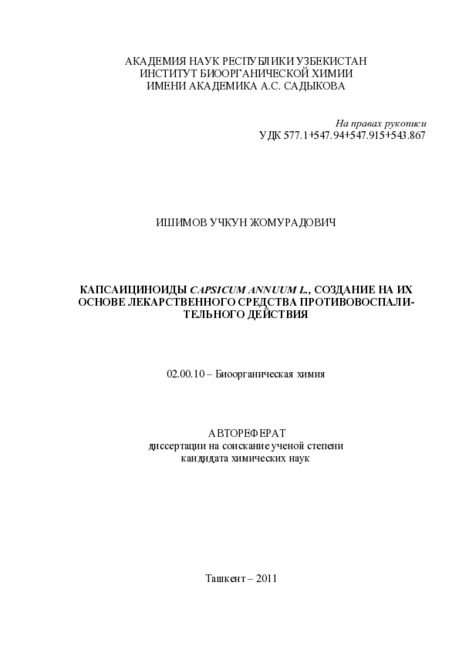
Capsicum annuum L. capsaicinoids and creation on their base drug mean with anti-inflammatory action
Subjects of research: red pepper Capsicum аппиит L.
Purpose of work: Investigation of the basic and minor components of sum of capsaici-noids which isolated from local red pepper Capsicum аппиит L. sorts, study of their biological, pharmacological properties and creation on their base medicinal preparate.
Methods of research: During investigation bioorganic chemistry, pharmacology and pharmacopea methods were used.
The results obtained and their novelty: Capsaicinoid, carotinoid and vitamin composition of the Capsicum аппиит L red pepper which cultivated in climatic conditions at the Fergana valley was studied for the first time by method IIPLC. Antiradical, membranetrope and antiexudative properties of the sum of capsaicinoids were investigated. A pilot instrument and preparative method for isolation the sum of capsaicinoids from the Capsicum аппиит L. red pepper is created. Quantative and qualitative composition of capsaicinoids which were isolated from the Capsicum аппиит L. red pepper were studied by LC-MS method for the first time. In the red pepper 11 capsaicinoids at different quantities were revealed. On the base of the sum of capsaicinoids substance is created. Fatty acid and vitamin composition of the grape oil which isolated from the local grape seeds are studied by methods ofGC-MS and I IPLC.
Practical value: On the base of the substance “Capsaicinoids”, grape oil, bee venom and methylsalysilate an anti-inflammatory preparate “Apicapsalvin” is created. The temporary pharmacological papers for the substance of “Capsaicinoids” and for the linimentum “Apicapsalvin” were registered by the main office of the quality control medicinal drugs and medicinal techniques of Ministry of Health, Republic of Uzbekistan (№ 42 Uz -1470 - 2009 and № 42 Uz -1471 -2009 respectively).
Degree of embed and economic effectivity: The substance of “Capsaicinoids” and linimentum of “Apicapsalvin” are ordered by the Ministry of Health, Republic of Uzbekistan (№329 from 30 October, 2009) for widely using in medicinal practice.
Field of application: bioorganic chemistry, pharmaceutics and medicine.

Bioselective macromolecular systems on basis of sulfated polysaccharides having antibacterial and antiviral activities
The aim of research work is purposeful synthesis of the modified polysaccharides containing substitutes of the anion nature (sulfate, phosphate and carboxyl), complementarity interacting with specific receptors of pathogens, and definition of their biological function for the purpose of the creation of therapeutic systems with directed antibacterial and antiviral actions.
The objects of the research work arc the celluloses isolated from cotton lint, pectin from apple and citrus, galactomannans obtained from Glcditsia triacanthos and Styphnolobium japonicum seeds, mono- (C-2; C-3 and C-6), di-(C-2,3 and C-2,6), tri-(C-2,3,6) substituted sulfate and phosphate derivatives of the polysaccharides, gram-negative and gram-positive bacteria, cell line of mouse embryonic fibroblasts SC-1 and NIH 3T3, Huh7.5.1 cells.
Scientific novelty of the research w ork is as follows:
it have been developed methods to obtain sulphate derivatives of polysaccharides with a molecular mass (MM) of 10.5-120.4 kD and a degree of substitution (DS) of 0.30-2.92, phosphate derivatives with MM of 6.2-72 kDa and DS 0.15 -2.45, with a uniformly distribution of the substituted groups along the macromolecular chain, as well as, it is validated a potential possiblity of the development of antibacterial and antiviral drugs based on them;
the influence of the molecular weight of the macromolecule of anion-derived polysaccharides, content of sulfate, phosphate, carboxyl groups along the macromolecule, conformation of the macromolecule, an arrangement of substituted groups in the anhydro-hexose unit on bactericidal and virucidal activity is established;
It was established that the sensitivity of pathogenic bacteria depends on the nature and molecular parameters of the modified polysaccharides, with an An increases in DS and Mw of the samples increase antibacterial activity to a certain value, but the spontaneous, sharp increases in the activity arc observed at DS from 1,9 to 2,1 and, sulfate beta-hexosans (cellulose, galactomannan) have a more effective antimicrobial effect in comparison with sulfated a-hexosans (amylose, polygalacturonic acid, dextran);
it has been established that the anionic derivatives of polysaccharides arc potential objects for the development of drugs against leukemia, hepatitis C and HIV and it has been proven that the antiviral activity against leukemia virus is in the range of 0.02-0.45 μg
Implementation of the research results:On the basis of the study on biosclcctive macromolecular systems on basis of sulfated polysaccharides having antibacterial and antiviral activities bottom:
it is resived patent for the invention of the Agency for Intellectual Property of the Republic of Uzbekistan "Tobacco Mosaic Virus Inhibitor on Plant Leafs" (12.10.2010, No. IAP 04603). The results of scientific research gave a possiblity to develop the preparation, which will be used against pathogens in crops and in medicine;
the developed conditions for systematic modification of polysaccharides in the automatic continuous control of polymerization reactions (ACOMP) allowed, for the first time, successfully implement the ACOMP system for continuous monitoring of the natural products modification reactions, and to develop and implement a new device for simultaneous measurement of bulk viscosity, molecular weight and ion concentration parameters (electrical conductivity and pH values) of the system on the recirculation ACOMP configuration (reference from Tulane University, USA, on November 3, 2016). This is a significant global achievement, since monitoring the polysaccharide modification reaction is the first step in controlling the process of modifying natural products - biopolymers;
the developed modification methods have been used in the preparation of selectively substituted sulfate derivatives of polysaccharides. It gave the possiblity to develop polymer antibacterial compositions against multidrug-resistant bactcrias as St. aureus, St. epidermides, E. coli (LN) и Klebsiella (reference from Kumamoto University of Japan on November 15, 2016);
based on the results on the supramolccular structure and anticoagulant activity of sulfate derivatives of polysaccharides, more than 80 foreign journals with high impact factor (JIF) were used for the physicochemical and pharmacological analysis of the samples. (Acta biomatcrialia, 2010, V.6, №2, Journal Impact Factor, IF 6,32; Biorcsourcc Technology, 2009, V.4, №2, Journal Impact Factor, IF 5,65; Biomacromolecules, 2011, V.6, №2, Journal Impact Factor, IF 5,25; Carbohydrate polymers, 2012, V.2, №2, Journal Impact Factor, IF 4,81; Food Hydrocolloids, 2014, V.35, №2, Journal Impact Factor, IF 4,75; Langmuir, 2013, V.12, №2, Journal Impact Factor, IF 3,83; Polymer, 2011, V.l, №2, Journal Impact Factor, IF 3,68; Phytomedicine, 2011, V.6, №2, Journal Impact Factor, IF 3,53; Cellulose, 2010, V.2, №2, Journal Impact Factor, IF 3,42). Application of scientific results made it possible to characterize the molecular and pharmacological properties of polysaccharide esters.
The structure and volume of the thesis. Containing 191 pages of text, the dissertation has introduction, five chapters, conclusions, list of references and appendices.

Biological features of nitrogen fixing cyanobacteria in extreme conditions
The aim of the research work was determination of perspectives of application of local strains of salt-tolerant nitrogen-fixing cyanobacteria with multifunctional properties for bio-reduction and increase in soil fertility in extreme condition.
Scientific novelty of the research work:
for the first time, multifunctional properties of local strains of cyanobacteria isolated from saline and contaminated soils as well as from the rhizosphere of cotton and wheat growing on irrigated soils in Uzbekistan arc showed. Based on morphological, cultural and genetic characteristics the isolated local strains of cyanobacteria were identified as Nostoc puriniforme 20, Nostoc linckia 4, Nostoc calcicola 25, Nostoc muscorum 14, Anabaena variabilis 18, Anabaena variabilis 21, Gloeothece rupestris 15, Synechococcus cedrorum 12;
for the first time it was established that the local strains of cyanobacteria were capable to grow, develop and nitrogen- fixing activity at 800 mM NaCl;
the humus, total nitrogen and potassium ammonia content were increased by introduction of active strains of cyanobacteria, while the total phosphorus content was reduced in relation to the control;
for the first time it was proved that, in response to salt stress in cyanobactcrial cells, the content of glycine and proline was sharply increased and also present of one form of aldehyde oxidase and xanthine dehydrogenase;
the stimulation effect of cultural broth of salt-resistant cyanobacteria on the germination energy, germination capacity and force seed growth of cotton seeds as well as height and length of the root of wheat was detirmined;
the synthesis of IAA by cyanobacteria regardless of L-tryptophan contents was revealed;
the stable and high ability to destruct polychlorinated biphenyls and lindane by the local strains of cyanobacteria and their associations in condition of salinity were proved;
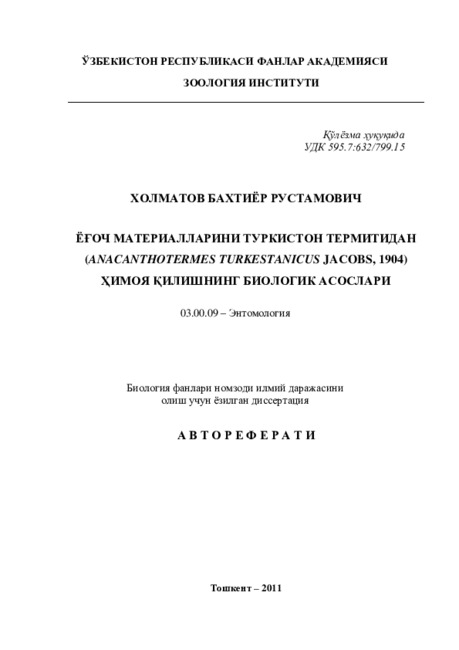
Biological basics of protection of wooden materials from damage caused by Turkestan termite (Anacanthotermes turkestanicus Jaсobs, 1904)
Subjects of research: the Turkestan termite, plants, chemical control.
Purpose of work: development of scientific bases of protection of wooden materials from damages caused by the Turkestan termite (Anacanthotermes turkestanicus).
Methods of research: common entomological and statistical methods were applied in the dissertation.
The results obtained and their novelty: specimens of 31 plant species from the flora of Uzbekistan were for the first time studied in the work. By the inflicted damage, these plants arc divided into four groups. Methods of protection of wood types, which arc not persistent to termite-inflicted damages, were developed using the impregnation of them with chemical preparations.
Practical value: types of wood, which can be used in the construction of residential houses and other buildings in places of termite habitats and persistent to their attack, arc identified. The use of a highly effective local preparation Scptor-2 is of importance for the protection of historic monuments from termite attacks.
Degree of embed and economic effectivity: a local preparation Scptor-2 was applied for the protection of the mosque Khasan-Khusan in Nurata district of Navoi province, where it showed a high economic effect.
Field of application: the Ministry of culture and sport of the Republic of Uzbekistan, Department for culture and sports of Navoi province. The obtained results arc also used in the construction of residential houses, public buildings and historic monuments for their protection of termites in areas of the intensive distribution of termites.

Biological activity of protein preparation from soybean in treatment of oncological diseases
Urgency and relevance of the dissertation topic. For today in the world preventive maintenance and treatment of oncological diseases remains actual in this connection the new medical products of a biological origin received from vegetative and animal raw materials arc created. On statistical data of the World Organization of Public health services within 20 years oncological disease grows in two1.
With acquisition of independence of Republic the organization of research works on reception of medical products from local raw materials and the carried out expanded actions for maintenance of the national parmacyeutical market with qualitative medical products at high level have led to certain results. Thus, it is especially important to note medical products received of local raw materials used at treatment of oncological diseases.
Now mechanisms of an aetiology and патогенеза cancer diseases definitively arc not found out because of the big complexity and variety of the molecular mechanisms occurring thus of processes. Carried out researches show, that soya components arc capable tumor cages, to induce apoptosis in the transformed cages, and they operate on tumor cages, and toxic effects concerning normal fabrics of an organism are, besides, one of the major problems is creation of effective medical products and their introduction in manufacture.
The given dissertational research in certain degree serves performance of the problems provided in Decisions of the President of Republic Uzbekistan from November, 28th, 2011 № software-1652 «About measures on the further deepening of reforming of system of public health services», the Cabinet of Republic Uzbekistan from March, 29th, 2012 № 91 «ABOUT measures on the further strengthening of material base and perfection of the organization of activity of medical institutions», and also in other is standard-legal documents accepted in given sphere.
The purpose of the research is reception of soy protein complex, determination of its physicochemical characteristics, anti-cancer activity on various kinds of cancer in vivo, in vitro on biopsies of breast and endometrial cancer, parmacy-toxicology of the received substance.
Scientific novelty of the research is as follows:
- protein complex was isolated from soy beans, its physicochemical properties were determined;
- the purified protein consists of a complex of proteins with a molecular weight of 12,7-79,0 kDa, and isoelectric point in pl -4,1; 4.2, 4.5 and 4.7;
- mass spectrometry determined the presence of Kunitz trypsin protease inhibitor in the protein complex;
- specific antitumor activity of the protein complex revealed at in vitro and in vivo conditions;
- parmacy-toxicological properties of the received substance were identified;
- medical form of "Biokor-0,2g" preparation was developed
Conclusions
1. For the first time Biokor preparation substance was extracted from the beans of Genetics-1 (Glycine max) soy sort. The substance consists of a complex of proteins with a molecular weight of 12,7-79,0 kD. Its isoelectric point is at pl -4,1, 4,2, 4, 5 and 4,7.2. The study determined amino acid composition of the protein complex active fractions Ala, Arg, Asp, Vai, His, Glu, Gly, He, Leu, Lys, Met, Pro, Ser, Tyr, Thr, Phe and identified proteins contained in Biokor preparation (Kunitz trypsin protease inhibitor, beta-amylase, bcta-conglycininalphaprimcsubunit, 2,4-DinduciblcglutathioncS-transferase, PRIO-likcprotcin, 24 kDaprotcinSC24).
2. The study has shown inhibitory activity of Biokor to serine proteases - trypsin, chymotrypsin and plasmin.
3. The study determined anti-tumor effect of Biokor substance on AKATOL, AKATON, B-16 melanoma and sarcoma 180 transplantable tumor strains. Biokor monotherapy inhibits the cancerous tissue growth in the transplanted tumor strains for more than 70%.
4. It has been revealed that Biokor substance increases proliferation of red bone marrow cells in experimental animals and their life span for 30 to 49% depending on tumor histogenesis.
5. It has been shown that introduction of Biokor substance in complex therapy with 5-fluorouracil increases antitumor effect on average from 10 to 25% and enhances the efficacy of radiotherapy of tumors at experimental animals on average for 1.5-2.3 times. Survival of experimental animals increases for 30 to 60%.
6. It has been determined that Biokor substance helps restore the immune status of tumor-bearing animals treated with 5-fluorouracil, modulates the therapeutic effect of anticanccr drugs and regulates immunity of tumor-bearing animals.
7. It has been determined that the introduction of Biokor substance improves hematological and morphological parameters of blood (normalization of the percentage of white blood cells, increase in the level of granulocytes, hemoglobin and quantity of red blood cell).
8. It has been shown in vitro that Biokor substance inhibits for more than 50% proliferation of breast cancer cells resistant to therapy (with the absence of receptors to estrogen and progesterone), endometrial cancer, colon cancer (with high content of bcl-2 and bK.i-67) at all stages of malignant transformation.
9. It has been found that Biokor substance belongs to class V of practically nontoxic compounds. LD50 at per os introduction of over 5000mg/kg, does not have cumulative effect, toxic influence on liver and kidney function, as well as pathomorphology of animal organs and tissues, has no effect on cardiovascular system, respiration and peripheral nervous system. Biokor substance does not have a local irritant, resorptive, allergenic, embryotoxic and teratogenic, mutagenic effects, immunotoxic effects on ccllularity and weight of lymphoid organs, on the number of macrophages and bone marrow ccllularity.
10. A dosage form of "Biokor - 0.2 g" immunomodulation preparation has been developed and is recommended for complex treatment of oncological diseases.
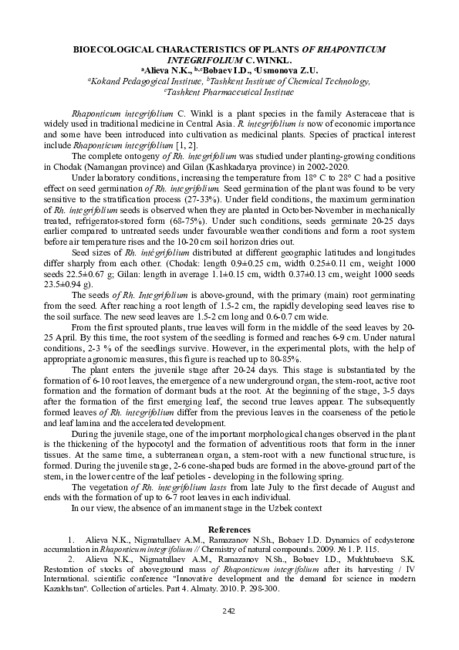
Bioecological characteristics of plants of Rhaponticum integrifolium C. Winkl.
Rhaponticum integrifolium C. Winkl is a plant species in the family Asteraceae that is widely used in traditional medicine in Central Asia. R. integrifolium is now of economic importance and some have been introduced into cultivation as medicinal plants. Species of practical interest include Rhaponticum integrifolium [1, 2].
Baliqchilik ozuqalarini bir hujayrali suvo‘tlari bilan boyitish biotexnologiyasi
Analysis of the main hydrodynamic regularities of the microburningprocess in order to identify the possibilities of using biogas from CO 2
This article presents the results of a study of the main hydrodynamic and mass transfer characteristics of a microbubble apparatus on model systems aimed at elucidating the possibility of using microbubble processes to conduct mass transfer processes between biogas and liquid.

Allocation, clearing and properties glucosooxydasa allocated from Aspergillus Niger
Subject of enquiry: different types of mycoses.
Aim of enquiry: develop methods of allocation, clearing glucosooxydasa from Aspergillus Niger, investigate of properties and compare of this method with another
Methods of enquiry: methods of cultivation, deferential centrifigure, chromatography, gel filtration, immunologic investigation.
The results achieved and their novelty: For the first time in Uzbekistan was allocated glucosooxydasa from Aspergillus Niger and properties were investigated. Effectively implementation of this ferment in quantity in biologic fluid was determine.
Practical value: antibody for glucosooxydasa were get and created affine column, which let for ones allocate this ferment. On the basis of allocated ferments was build set for determine of glucose in biological fluids.
Degree of embed and economic effectivity: obtained results expand available representations about allocation, clearing and properties ferments; will help to create domestic sets for definition glucose in biological fluids.
Sphere of usage: Biochemistry, medicine, laboratory diagnostics.
Insights into the Pathogenesis, Virulence Factors, and Diagnosis of Helicobacter pylori: A Comprehensive Review
gastrointestinal illnesses, is introduced in-depth in this article. We examine how H. pylori
establishes infection, thwarts the hosting immune response, and causes inflammation as
we explore the pathophysiology of this bacterium. We also talked about how H. pylori
influences host cells and develops a favorable environment for survival. We also go over the
many methods for identifying H. pylori, such as endoscopy, biopsy, blood, breath, feces, and
others. We stress the importance of an accurate and speedy diagnosis while outlining the
advantages and disadvantages of each diagnostic strategy to manage disorders caused by H.
pylori effectively. Throughout this review, we aim to unravel the mysteries surrounding H.
pylori, providing valuable insights into its pathogenesis, the intricate interplay of virulence
factors, and the diverse diagnostic strategies employed in clinical practice. Enhancing our
understanding of H. pylori can pave the way for improved therapies and patient outcomes.