


Цель. Анализ осложнений проникающих ранений органа зрения у детей и пути их устранения.
Материал и методы. Под наблюдением находилось 36 пациентов (36 глаз) в возрасте от 6 до 14 лет с различными травмами глаз. Мальчики составили 70% случаев, девочки — 30% случаев. Всем детям проведены офтальмологические и клинические исследования.
Результаты. Всем пациентам ПХО проведена по месту жительства в различных регионах республики. ВХО проводилась по следующим показаниям: набухающая катаракта, фильтрация роговичных и склеральных ран, локальный эндофтальмит, ущемление радужки, гипотония, вторичная глаукома, несостоятельность швов, вялотекущий увеит, деформация век, отрыв слезных канальцев, неушитая склеральная рана, подозрение на внутриглазное инородное тело, разрушение глазного яблока.
Причинами осложнений ПХО явились: тяжесть травм (47,2%), неквалифицированная первая помощь (41,7%), позднее обращение пациентов (47,2%).
Вывод. В результате проведенной ВХО в 99,6% случаев удалось купировать воспалительные реакции и сохранить глаз как анатомический орган, в 67,4% случаев сохранить зрительные функции. Необходима активизация просветительской работы среди населения, повышение качества экстренной офтальмологической помощи и адекватной реабилитации пациентов.
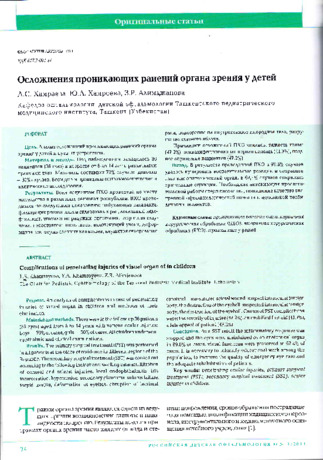
Цель. Анализ осложнений проникающих ранений органа зрения у детей и пути их устранения.
Материал и методы. Под наблюдением находилось 36 пациентов (36 глаз) в возрасте от 6 до 14 лет с различными травмами глаз. Мальчики составили 70% случаев, девочки — 30% случаев. Всем детям проведены офтальмологические и клинические исследования.
Результаты. Всем пациентам ПХО проведена по месту жительства в различных регионах республики. ВХО проводилась по следующим показаниям: набухающая катаракта, фильтрация роговичных и склеральных ран, локальный эндофтальмит, ущемление радужки, гипотония, вторичная глаукома, несостоятельность швов, вялотекущий увеит, деформация век, отрыв слезных канальцев, неушитая склеральная рана, подозрение на внутриглазное инородное тело, разрушение глазного яблока.
Причинами осложнений ПХО явились: тяжесть травм (47,2%), неквалифицированная первая помощь (41,7%), позднее обращение пациентов (47,2%).
Вывод. В результате проведенной ВХО в 99,6% случаев удалось купировать воспалительные реакции и сохранить глаз как анатомический орган, в 67,4% случаев сохранить зрительные функции. Необходима активизация просветительской работы среди населения, повышение качества экстренной офтальмологической помощи и адекватной реабилитации пациентов.
Аветисов С.Э. и др. Офтальмология: национальное руководство. - М.: ГЕОТАР-Медия, 2008. - С. 865.
Лола Хамраева, Д.У. Нарзуллаева, Факторы риска и прогноз развития псевдофакической миопии у детей , in Library: Том 21 № 2 (2021): Архив
Лола Хамраева, Л Бобоха, Д Махмудова, Некоторые аспекты осложнений хирургии врожденной катаракты , in Library: Том 1 № 1 (2023): архив
Лола Хамраева, Д.У. Нарзуллаева, Особенности расчета оптической силы интраокулярной линзы у детей с врожденной катарактой в риске развития псевдомиопической близорукости. , in Library: Том 21 № 2 (2021): Архив
Лола Хамраева, Дилдора Нарзуллаева, Любава Бобоха , Дилором Махмудова, New Ways to Measure Intraocular Pressure in Children with Microphthalmia and Blepharophimosis , in Library: Том 2 № 2 (2024): inLibrary
Лола Хамраева, Л.Ю. Бобоха, Особенности течения интра- и послеоперационного периода у условно часто болеющих детей после имплантации иол , in Library: Том 22 № 2 (2022): Архив
Лола Хамраева, Д.У. Нарзуллаева, Факторы, влияющие на целевую рефракцию у детей при артифакии после экстракции врожденной катаракты , in Library: Том 20 № 3 (2020): Архив
Лола Хамраева, Т.Б. Круглова, Д.У. Нарзуллаева, Клинико-функциональные показатели глаз у детей с артифакией и их матерей , in Library: Том 22 № 2 (2022): Архив
Лола Хамраева, С.З. Абдихашимовна, Ж.Ш. Согиржонов, Нозологическая структура офтальмологических заболеваний , in Library: Том 21 № 4 (2021): Архив
Лола Хамраева, Ю.А. Хамроева, Ш.Н. Хамидова, Социально значимые заболевания глаз у детей , in Library: Том 22 № 2 (2022): Архив
Юлдуз Хамроева, Лола Хамраева, Оптико-биометрические показатели глаза у детей при ювенильной глаукоме, сочетанной с миопией , in Library: Том 22 № 3 (2022): Архив




Copyright (c) 2014 Лола Хамраева

Это произведение доступно по лицензии Creative Commons «Attribution» («Атрибуция») 4.0 Всемирная.

inLibrary — это научная электронная библиотека, построенная на парадигме открытой науки (Open Science), основными задачами которой является популяризация науки и научной деятельности, общественный контроль качества научных публикаций, развитие междисциплинарных исследований, современного института научной рецензии, повышение цитируемости узбекской науки и построение инфраструктуры знаний.
КОНТАКТЫ:
