Том 1 № 1 (2022): Современные тенденции развития цифровизации в сфере юстиции
Том 1 № 1 (2022): Современные тенденции развития цифровизации в сфере юстиции
Опубликован:
27-03-2022
Статьи
205-218
218
59
Обстоятельства, смягчающие наказание и исключающие преступность деяния по уголовному законодательству Литовской Республики (сравнительный анализ)
Литовское уголовное право в последнее столетие воспроизводило сначала русское, а затем и советское законодательство. В 1918 г. В Литве немецкими оккупatsiонными властями было введено русское Уголовное уложение 1903 г., которое оставалось в силе и после провозглашения независимости республики. В 1940 г. на территории Литвы стал действовать УК РСФСР и уголовные законы СССР. В 1960 г. Был принят УК Литовской ССР, копировавший кодексы других союзных республик. Этот Кодекс с многочисленными изменениями действовал до конца 2002 г
139-145
188
64
Состояние и перспективы цифровизации в судебно-правовой сфере
В статье рассматривается состояние современного права в условиях распространения цифровых технологий, которые преобразуют устоявшиеся государственные и общественные институты. Автор ставит цель исследовать влияние цифровых технологий на содержание и структуру права, выделяя новые преимущества и угрозы, связанные с применением цифровых технологий в правовой практике, и предлагая возможные варианты правового регулирования различных аспектов правового статуса субъектов права, правового режима объектов права, виртуальных правоотношений. Анализ процесса и основных направлений «проникновения» цифровых технологий в отрасли права, признание связующей роли информационного права в системе «публичное частное», использование общенаучных и специальных юридических методов, в том числе сравнительно-правового, приводят автора к более общим выводам о состоянии права в целом.
146-150
195
76
Особенности правового регулирования социальных сетей в США
В статье рассматриваются особенности правотворческой политики в сфере интернет-отношений, в т.ч. зарубежных стран. Анализируются различные способы правового регулирования отношений, возникающих в сети Интернет. Обосновывается необходимость разработки норм на международном уровне, а именно создание стратегии правового регулирования интернет-отношений.
151-161
149
83
Риски киберпреступности для экономики Республики Узбекистан
В данной статье автором были проанализированы детерминанты киберпреступлений, в частности исследованы причины и условия, способствующие совершению преступлений в сфере информационных технологий и безопасности.
162-165
68
66
Использование цифровых технологий в расследовании преступлений с причинением умышленного телесного повреждения
Ежегодно в мире регистрируется в среднем более 1,1 миллиарда преступлений, а около 700 миллионов преступлений остаются незарегистрированными. Примечательно, что в судебной практике почти половина этих преступлений не раскрывается. Создание в международно-правовых актах эффективного механизма борьбы и расследования преступлений с умышленным причинением телесных повреждений очень важно и свидетельствует о необходимости особого подхода к данному вопросу.
166-169
62
52
Механизм законодательного регулирования процесса применения информационно-коммуникационных технологий в предварительном расследовании
В статье рассмотрено развитие законодательного регулирования, касающегося обращений граждан в органы государственной власти и местного самоуправления, предоставления ими услуг, реализации общественных инициатив с точки зрения возможностей использования информационно-коммуникационных технологий.
170-187
210
391
История возникновения киберпреступности и ее развитие
В данной статье рассматривается история киберпреступности, отечественного и зарубежного законодательства в данной области, а также, современное состояние киберпреступности на примере статистических данных.
188-192
76
47
Правовой анализ существующих проблем в сфере информационной безопасности
В данной статье рассматриваются актуальные вопросы информационной безопасности. В частности, анализируются систематические просчеты в государственных органах, случаи, которые необходимо урегулировать в этой сфере. Описан передовой зарубежный опыт.
Меры, которые необходимо принять, подчеркнуты.
Меры, которые необходимо принять, подчеркнуты.
193-197
165
47
Обеспечение информационной безопасности органами внутренних дел: требование времени
Сегодня в мире проблема обеспечения информационной безопасности государства, общества и личности приобретает все более глобальное значение. В настоящее время активно идут процессы накопления международного опыта в сфере обеспечения информационной безопасности, особенно в рамках деятельности таких международных организаций, как ООН, Совет Европы, Европейский Союз, БРИКС, ШОС, ЕАЭС, СНГ, Союзного государства Республики Беларусь и России и др [1]. Генеральной Ассамблеей ООН, ОБСЕ, Советом Европы, ШОС, СНГ и иными организациями были приняты специальные акты, касающиеся обеспечения информационной безопасности, противодействия и профилактики преступного использования информационных технологий, предупреждения преступности в данной сфере на региональном и международном уровне.
198-201
156
51
Актуальные проблемы борьбы с преступностью в сфере информационных технологий в США
Одной из самых актуальных проблем мирового сообщества стал экспоненциальный рост в последнее десятилетие преступлений в сфере информационных технологий. Наличие персональных компьютеров с мощнейшими процессорами, присутствие Интернета практически во всех сферах человеческой деятельности, миллионы гигабайт контента о способах и методах взлома сетей, колоссальный рост продаж смартфонов, планшетов и других модных гаджетов в последние годы создают новые реальные угрозы обществу.
133-135
157
143
Цифровой Узбекистан – цифровое будущее
За последние два десятилетия произошли стремительный рост информационно-коммуникационных технологий и повышение их роли в экономическом развитии. Дополнительный стимул развитию цифровизации придала пандемия коронавирусной инфекции (COVID-19). Цифровизация изменила многие аспекты человеческого общества. Она оказала значительное влияние на бизнес-процессы в международной торговле, сокращая издержки, увеличивая объем и скорость кроссграничных транзакций. Важнейшим двигателем торговли становится электронная коммерция, масштабы которой растут из года в год. В статье рассматриваются новые тенденции глобального процесса цифровизации.
219-223
253
57
Молодежная безработица как одна из самых актуальных проблем в Узбекистане
Согласно статье 37 Конституции Республики Узбекистан, в число экономических и социальных прав граждан входит право каждого на труд, на свободный выбор работы, на справедливые условия труда и на защиту от безработицы в порядке, установленном законом
224-229
203
40
Анализ действующего законодательства Республики Узбекистан в области охраны древесных насаждений и памятников природы и предложения по их усовершенствованию
В данной статье анализируется действующее законодательство Республики Узбекистан по вопросам охраны окружающей среды и памятников природы и рассматриваются вопросы дальнейшего совершенствования деятельности государственных и общественных организаций по обеспечению защиты деревьев в Узбекистане. Анализируются проблемы в области экологии и защиты деревьев, в особенности, по их незаконной вырубке. Кратко затрагивается тема уже проделанных работ и поставленных задач в этой сфере. Вносятся предложения по усовершенствованию национального законодательства Республики Узбекистан в области охраны древесных и кустарниковых насаждений.
230-232
54
35
Некоторые комментарии о разнице между мошенничеством и грабежом
Сегодня в целях ускорения функции государственной защиты собственности особое внимание уделяется предупреждению любых посягательств на право собственности, борьбе с ними, выявлению проблем в правоприменении, совершенствованию уголовного законодательства в целях их решения.
233-239
70
51
Некоторые проблемы организации органов государственного управления: анализ «квазинезависимых» регулирующих органов
В 2016-2020 годах были проведены самые кардинальные административные реформы в истории Узбекистана: усовершенствована и реорганизована деятельность более 70 органов государственного управления; Было создано около 20 новых государственных органов. Однако принцип «независимости», являющийся важнейшим инструментом контроля при определении правового статуса некоторых регулирующих органов, часто оставался необеспеченным. В статье анализируется деятельность некоторых регулирующих органов, которые являются «квазинезависимыми», т.е. внешне независимыми, но не имеют «защитной оболочки» от внешнеполитических воздействий.
240-242
97
192
Институт административных судов и их роль в судебной системе
В последние годы в нашей стране системно ведется работа по совершенствованию судебной системы. Усиливается надежная защита прав и интересов граждан и предпринимателей. В результате этой работы защита прав человека вышла на новый уровень в судебном процессе.
243-247
63
47
Какие действия предприняты в области борьбы с коррупцией в мире?
Это зло не только серьезно подрывает различные сферы любого государства и общества, в частности его политическое, экономическое, социальное и культурное развитие, но и ведет к нарушению прав и свобод человека. Поэтому борьба с ним имеет международное значение и является одним из важнейших вопросов мировой политики.
248-262
103
171
Укрепление правовых основ коопереации – как условия социального-экономического развития
Кооперативы играют важную роль в социально- экономическом развитии страны. За последние годы в нашей стране принято около 10 нормативно-правовых актов по развитию кооператива.
В основном они направлены на выращивание и переработку хлопка-сырца, фруктов и овощей, развитие производственной кооперации, расширение сотрудничества предприятий и населения. Однако роль кооперации в экономике нашей страны можно негативно сравнить с зарубежными странами. Это связано с тем, что наше национальное законодательство, регулирующее деятельность кооперативов, не соответствует требованиям международных стандартов, сохраняется вмешательство государства в эту сферу, отсутствуют механизмы поощрения членства в кооперативах.
В статье анализируются факторы, влияющие на развитие кооперативов, и даются рекомендации по законодательству, основанные на существующей практике и опыте зарубежных стран.
В основном они направлены на выращивание и переработку хлопка-сырца, фруктов и овощей, развитие производственной кооперации, расширение сотрудничества предприятий и населения. Однако роль кооперации в экономике нашей страны можно негативно сравнить с зарубежными странами. Это связано с тем, что наше национальное законодательство, регулирующее деятельность кооперативов, не соответствует требованиям международных стандартов, сохраняется вмешательство государства в эту сферу, отсутствуют механизмы поощрения членства в кооперативах.
В статье анализируются факторы, влияющие на развитие кооперативов, и даются рекомендации по законодательству, основанные на существующей практике и опыте зарубежных стран.
263-268
107
48
Права на земли сельскохозяйственного назначения субъектов предпринимательской деятельности, правовая основа их реализации и коммерциализации
Cтатье исследуется состояние создания нормативно- правовой базы коммерциализации земель сельскохозяйственного назначения в нашей стране. В статье проводится сравнительный анализ законодательства Республики Узбекистан и международного опыта использования и перехода прав на земли сельскохозяйственного назначения.
269-273
254
53
Особенности цифровизации как инструмента борьбы с коррупцией
Цифровизация структур государственного управления и оказания услуг населению и предупреждение преступности в настоящее время являются неотъемлемой составной частью друг друга. Основной причиной тому является глобальное внедрение информационно- коммуникационных технологий во все области жизнедеятельности государств всего мира. Этот процесс начался давно, однако не стоит на месте и с каждым днём появляются как новые системы, так и новые способы совершения различных видов преступлений. Учитывая особую важность борьбы с таким массовым социальным явлением, как коррупция, которая оказывает негативное влияние на развитие любого государства, считается логичным внедрение информационных технологий как важного инструмента в борьбе с ней, в сферу оказания государственных услуг населению, а также в других государственных структурных образованиях. Такой способ является одним из эффективных методов борьбы с коррупцией, однако имеет свои особенности, на которые необходимо обратить внимание при внедрении ИКТ как важного инструмента противодействия коррупции, о чём говорится в данном исследовании.
75-78
135
66
Перспективы развития модели «Умного регулирования»
В данной рассмотрены перспективы развития модели «умного регулирования» в Республике Узбекистан. Изучен опыт зарубежных стран по данной тематике.
25-30
109
74
Актуальные вопросы защиты данных при оказании электронных государственных услуг
Существует три типа оцифровки. Одним из них является оцифровка, которая преобразует бумагу в цифровую форму. Цифровизация — это автоматизация процессов. Наконец, у нас есть цифровая трансформация, что уже верно, но она может показать огромный разрыв между наиболее модернизированными странами и странами, находящимися в цифровом переходе. Это означает использование всех доступных технологий, в основном искусственного интеллекта и облачных серверов, чтобы изменить бизнес так, как мы и представить себе не могли. То, о чем говорит Словенский институт Йозеф Стефан, является примером этих изменений и того, как они повлияют на мир бизнеса и управления, а искусственный интеллект — цифровые двойники. Учитывая его трансформационную силу, это необходимо рассмотреть более подробно.
31-34
117
56
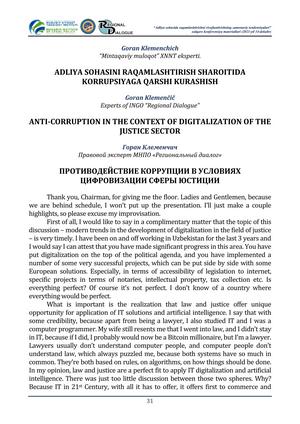
Противодействие коррупции в условиях цифровизации сферы юстиции
Прежде всего, по данному вопросу хочу сказать, что тема обсуждения – современные тенденции развития цифровизации в сфере юстиции – очень актуальна. Я работал в Узбекистане в течение последних 3 лет, и я могу сказать, что вы добились значительного прогресса в этой области. Вы поставили цифровизацию на первое место в политической повестке, реализовали ряд очень успешных проектов, которые можно поставить рядом с некоторыми европейскими решениями. Особенно с точки зрения доступности законодательства в Интернете, конкретных проектов с точки зрения нотариуса, интеллектуальной собственности, сбора налогов и т. д. Все ли идеально? Конечно, это не идеально. И я не знаю страны, где все было бы идеально.
35-40
260
59
Судебно-экспертная деятельность в Республике Узбекистан в эпоху цифровизации
Цифровая трансформация государства обусловливает внедрение инновационных подходов во все сферы общественных отношений.
Развитие цифровой экономики, внедрение технологий искусственного интеллекта определены в качестве первостепенных задач государственной политики. Планируется проведение Международного цифрового форума в Узбекистане, цифровизация сферы логистики и многое другое. С одной стороны, диджитализация направлена на улучшение жизни общества, получение государственных и банковских услуг в удаленном режиме, минимизации коррупционных рисков и т.д.
Развитие цифровой экономики, внедрение технологий искусственного интеллекта определены в качестве первостепенных задач государственной политики. Планируется проведение Международного цифрового форума в Узбекистане, цифровизация сферы логистики и многое другое. С одной стороны, диджитализация направлена на улучшение жизни общества, получение государственных и банковских услуг в удаленном режиме, минимизации коррупционных рисков и т.д.
41-51
329
114
Основные этапы и особенности развития правового регулирования оказания интерактивных государственных услуг в Республике Узбекистан
Статья посвящена обзору и анализу законодательных актов Республики Узбекистан, регламентирующих оказание интерактивных государственных услуг. Раскрываются основные исторические этапы развития правового регулирования электронных государственных услуг с момента их возникновения и до сегодняшнего дня, связь этого процесса с развитием технологий и других факторов, а также ставится вопрос об институциональном и законодательном совершенствовании управления электронного правительства в Узбекистане.
52-55
82
50
Состояние и перспективы цифровизации нотариата
Отправной точкой для цифровизации нотариата в Узбекистане стало Постановление Президента Республики Узбекистан от 27 июня 2013 года № ПП-1989 «О мерах по дальнейшему развитию национальной информационно-коммуникационной системы Республики Узбекистан».
56-60
160
115
Тенденции цифровой трансформации юридического образования и науки
Сегодняшний уровень развития информационно-коммуникационных технологий и цифровизация различных сфер и отраслей показывает, что нашу жизнь невозможно представить без глобальной сети Интернет.
Деятельность образовательных учреждений, особенно в период пандемии коронавируса, была «вынуждена» трансформироваться в цифровое пространство. Подобного рода ситуация стала отличным поводом для рассмотрения тезиса о перспективах цифровой трансформации научно- образовательной среды, в частности юридического образования и науки.
Деятельность образовательных учреждений, особенно в период пандемии коронавируса, была «вынуждена» трансформироваться в цифровое пространство. Подобного рода ситуация стала отличным поводом для рассмотрения тезиса о перспективах цифровой трансформации научно- образовательной среды, в частности юридического образования и науки.
61-64
128
66
Цифровизация судебной деятельности: фактор открытости и прозрачности
Принятые меры по широкому внедрению современных технологий в работу судов позволили им обеспечить открытость и прозрачность своей деятельности, добиться справедливости.
С 2016 года принято более 20 нормативно-правовых актов, направленных на повышение эффективности работы судов.
Однако существуют проблемы с внедрением нормативных актов и использованием программного обеспечения, связанного с оцифровкой судов.
С 2016 года принято более 20 нормативно-правовых актов, направленных на повышение эффективности работы судов.
Однако существуют проблемы с внедрением нормативных актов и использованием программного обеспечения, связанного с оцифровкой судов.
65-70
254
63
Информационные технологии обеспечения эффективности и качества юридических услуг
В статье рассматриваются вопросы развития информационных технологий, которые ускорили процесс коммуникации, изменили подход к систематизации, хранению и поиску документов, рассматриваются применение инструментов из информационной среды, которые помогают юристам быстрее получать необходимые для работы данные, автоматизировать процесс предоставления юридической услуги. Новые технологии в юридической практике в настоящее время являются очень популярными и представляют собой приоритетную важность для развития права в стране. Благодаря их внедрению возможности как физических, так и юридических лиц (в том числе органов государственного и местного управления) расширяются. Технологии в юриспруденции представляют собой систему с актуализированными действиями внешнего проявления, которые основываются на прогнозах, принципах и планах. К ней относят операции должностных лиц, физических лиц, органов, имеющих компетенцию в издании (реализации, толковании, систематизации и т.д.) правовых актов, имеющих нормативную силу. В ходе этих действий используются необходимые ресурсы, правила, средства, способы и приёмы.
В настоящее время технологии в правовой сфере становятся менее консервативными и развиваются по следующим направлениям: 1) автоматизируются типовые услуги юристов: благодаря этому граждане могут решать вопросы онлайн без помощи юриста; 2) создаются специальные сайты, где можно зарегистрировать бизнес, задекларировать доходы и подготовить несложные договоры, а также исковые заявления; 3) запускаются интернет-площадки, которые имеют формат каталогов: благодаря им снижается стоимость услуг юристов, так как конкуренция прозрачна.
Работа юристов тоже автоматизируется. Это происходит за счёт создаваемых CRM, а также систем документооборота. Это явление распространено во всем мире и в разных направлениях, не только в экономике.
В настоящее время технологии в правовой сфере становятся менее консервативными и развиваются по следующим направлениям: 1) автоматизируются типовые услуги юристов: благодаря этому граждане могут решать вопросы онлайн без помощи юриста; 2) создаются специальные сайты, где можно зарегистрировать бизнес, задекларировать доходы и подготовить несложные договоры, а также исковые заявления; 3) запускаются интернет-площадки, которые имеют формат каталогов: благодаря им снижается стоимость услуг юристов, так как конкуренция прозрачна.
Работа юристов тоже автоматизируется. Это происходит за счёт создаваемых CRM, а также систем документооборота. Это явление распространено во всем мире и в разных направлениях, не только в экономике.
71-74
155
42
Понятие и суть «Электронного правительства»
Развитие информационных и коммуникационных технологий привело к существенным изменениям в политической жизни общества, в частности в административно-правовых отношениях, возникающих при взаимодействии власти и граждан, в частности, большому и быстрому использованию текстов законопроектов, даже на начальном этапе наличие аналитических данных по этому вопросу; прозрачность информации о деятельности органов государственной власти и предоставление возможностей для сотрудничества с органами государственной власти.
17-24
274
77
Основные тенденции развития цифровизации органов юстиции Республики Узбекистан на современном этапе
На сегодняшний день цифровизация в деятельности государственных органов стала не только самоцелью, но и объективной необходимостью создания качественно новой и современной системы функционирования. Как отмечал глава государства Шавкат Мирзиёев, «без цифровизации не будет результата, не будет развития». Действительно, внедрение современных информационно-коммуникационных технологий создало необходимую предпосылку для рассмотрения цифровизации как перспективы развития деятельности самого государства и отдельного взятых органов в системе власти.
79-82
124
99
Современные тенденции развития цифровизации в сфере юстиции
Основными направлениями деятельности Минюста являются укрепление законности и правопорядка в стране с участием правоохранительных органов и государственного управления, а также долгосрочные организационные планы мероприятий по комплексной государственной программе общеправовых образование, разрабатывает и контролирует его выполнение. Требует правовой статистики от всех государственных и иных органов, дает методические указания по ведению и анализу статистической отчетности по этим вопросам, информирует Олий Мажлис Республики Узбекистан и Президента Республики Узбекистан о правовой защите граждан и их информирует вас о статусе юридической помощи. При проведении такой деятельности, конечно, важно, чтобы не было проблем, чтобы качество работы было хорошим, чтобы цифровизация в сфере юстиции была надежной и быстрой. В этой статье представлены идеи и размышления о текущих тенденциях развития цифровизации в сфере юстиции.
83-89
109
280
Цифровые технологии и цифровая судебная экспертиза
В статье освещаются проблемы повышения эффективности и расширения возможностей судебно-экспертной деятельности на основе применения современных цифровых технологий. Рассмотрены цифровые технологии, используемые в современной экспертной практике. Отмечается, что внедрение современных технологий в экспертную практику происходит двумя путями: творческим использованием достижений математических, технических и естественных наук и приспособлением существующих цифровых технологий и информационных систем для нужд судебно-экспертной деятельности. Основное внимание в работе уделено перспективным направлениям цифривизации экспертной деятельности, к которым отнесены создание общей специализированной информационно-коммуникационной сети экспертных учреждений, разработка новейших методик судебных экспертиз, необходимых для борьбы с преступными проявлениями в сети Интернет, применение систем искусственного интеллекта, включая робототехнику. Автор отмечает проблемы, связанные с цифровизацией судебной экспертизы: процессуальные ограничения, быстрое развитие цифровых технологий и отставание инструментальных средств анализа данных, необходимость дальнейшего развития экспертных методик и обеспечения информационной безопасности судебно-экспертной деятельности, совершенствования подготовки судебно-экспертных кадров.

90-95
133
49
Социальная значимость взаимодействия органов досудебного производства в борьбе с преступностью в условиях цифровой трансформации
В статье раскрывается значение взаимодействия органов досудебного производства в деятельности по борьбе с преступностью в условиях развития цифровизации общества. Проводится научный анализ некоторых имеющихся проблем в сфере организации данного взаимодействия. Ставятся необходимые для разрешения задачи и даются предложения, рекомендации по их устранению и повышению эффективности в данном направлении. Особо отмечается необходимость активного внедрения возможностей современных информационно- коммуникационных технологий по собиранию, фиксации и исследованию данных в раскрытии и расследовании преступлений.
99-106
101
65
Цифровизация в области интеллектуальной собственности
В условиях технологической революции невозможно обеспечить снижение издержек и правовых рисков, связанных с предоставлением правовой охраны и использованием результатов интеллектуальной деятельности, без создания доступных, безопасных сервисов, соответствующей инфраструктуры, в том числе и предоставляемой государством. Вместе с тем внедрение прогрессивных технологий требует устранения ряда правовых препятствий, связанных в том числе с пробелами и противоречиями в действующем законодательстве. Прежде всего речь идет о трансформации системы государственной регистрации объектов интеллектуальной деятельности, а также о проблемах, связанных с заключением договоров по распоряжению интеллектуальными правами в электронной среде.
107-111
160
78
Внедрение эффективных механизмов правового регулирования электронной коммерции как одна из основных функций Министерства Юстиции Республики Узбекистан
Статья посвящена анализу совершенствования правовых основ деятельности Министерства юстиции Республики Узбекистан. В частности, автором была проанализирована задача Министерства юстиции по внедрению эффективных механизмов правового регулирования электронной коммерции. Также были раскрыты некоторые аспекты пользования системой эскроу в сфере электронной коммерции.

112-123
252
51
Проблемы развития института банкротства в условиях цифровой экономики
В данной научной статье рассмотрены цифровые технологии, которые применяются при производстве дел о банкротстве (экономической несостоятельности), их роль на современном этапе развития права Республики Узбекистан, а также разработаны предложения по совершенствованию национального законодательства о банкротстве.
124-127
81
220
Воспрепятствование вхождению на рынок как одна из форм недобросовестной конкуренции в Узбекистане
Согласно Закону Республики Узбекистан «О конкуренции» недобросовестная конкуренция является нарушением отдельных видов правонарушений в других отраслях права, в частности, в сфере правового регулирования интеллектуальной собственности, защиты прав потребителей и т.п. признано запланированным действием. На практике формы недобросовестной конкуренции очень разнообразны, поэтому определить точный перечень таких правонарушений невозможно. В связи с этим соответствующие положения иного законодательства в законодательстве о недобросовестной конкуренции не могут повторяться и являются некорректными.
128-132
65
51
Текущее состояние “Цифровой дипломатии” в Узбекистане: зарубежный опыт (на примере США) и предложения
Аналитический обзор о реформировании дипломатических ведомств, основанный на изучении опыта преобразований дипслужб в разных странах за последние 10 лет. В обзоре описаны глобальные и национальные драйверы реформ, особенности их подготовки и проведения, а также «лучшие практики», с помощью которых дипломатические ведомства стремятся адаптироваться к изменяющимся глобальным внешнеполитическим условиям

